Get free quotes from mold inspection near you
Takes about a minute. Free, no obligation; providers reply to you directly.
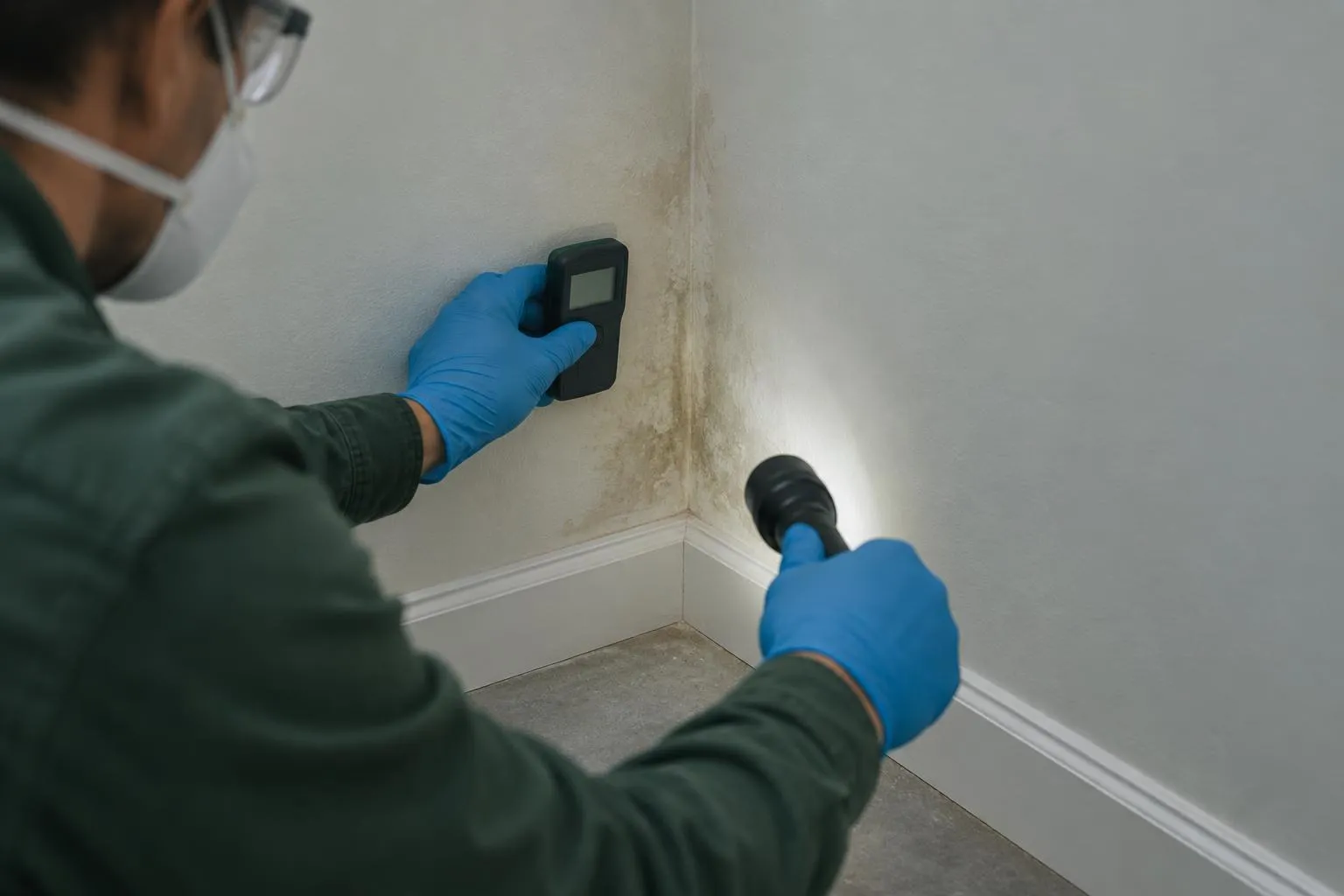
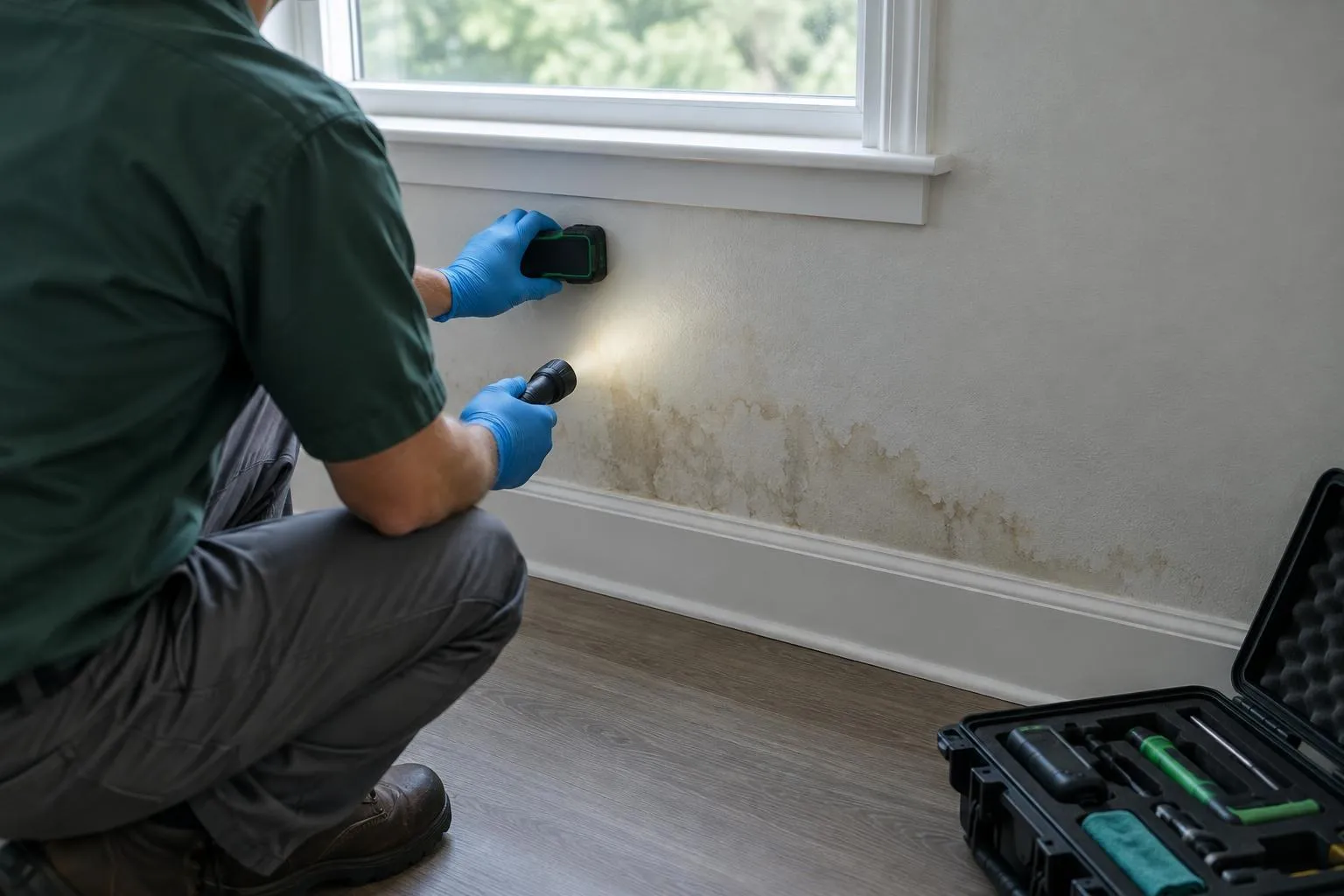
I watched a mold inspector spend forty-five minutes carefully measuring moisture levels in a basement corner, documenting every spike on his handheld device. He’d been doing this for fifteen years. Then his lab work came back three days later, and a technician—someone he’d never met—reinterpreted the spore counts. The final report contradicted his field notes. He shook his head and said, “This is why I started looking at what AI can actually do here.”
That conversation stuck with me. Because the narrative around AI replacing skilled trades is everywhere, and it’s almost always wrong in the same way: it confuses automation with replacement. For mold inspectors, the question isn’t whether robots will put you out of work. It’s whether you’ll adapt to tools that are already reshaping how the industry operates.
The Short Version
AI won’t replace mold inspectors—but it will change what the job looks like. AI excels at consistency (analyzing 100% of samples with zero fatigue), speed (near-instant results instead of days), and pattern recognition (identifying mold species with 99.86% accuracy). The work that requires judgment, client communication, moisture mapping, and on-site decision-making? That’s still fundamentally human. The real question is whether you’ll be the inspector using AI tools or the one getting replaced by someone who does.
Key Takeaways
- AI surpasses traditional methods in accuracy. NIST research shows AI-based mold identification beats manual lab analysis for consistency and reliability.
- The job is augmenting, not disappearing. No credible research predicts job displacement; instead, AI handles repetitive analysis work so inspectors focus on higher-value tasks.
- Speed and consistency are game-changers. Traditional testing takes days. AI delivers results in near-real-time while eliminating technician variability.
- The adopters win. One mold inspection firm generated 161 leads and 20+ monthly calls using AI outbound systems—they’re competing differently, not being replaced.
What AI Actually Does (And Doesn’t Do) in Mold Work
Here’s the honest breakdown: AI is exceptional at volume and consistency. It’s worthless at judgment.
A mold inspector’s job has two layers:
Layer 1: Analysis and Classification (the part AI is genuinely better at)
- Reviewing air and surface samples for species identification
- Counting spores across multiple samples
- Cross-referencing environmental data for patterns
- Documenting findings in standardized reports
Layer 2: On-Site Decision-Making (the part AI can’t touch)
- Visual inspection for hidden moisture and damage
- Choosing where to sample based on building history and occupant symptoms
- Communicating findings to stressed homeowners
- Recommending remediation strategy based on budget, health risk, and structural constraints
AI crushes Layer 1. It can process 100% of your samples with objective consistency instead of the variability that comes from manual analysis. NIST research confirms AI-driven systems exceed traditional methods in accuracy for indoor air quality assessments. No human lab tech maintains perfect attention across 50 samples in a day—AI does.
But Layer 2? That’s where an inspector’s 15 years of experience, intuition, and professional judgment live. That’s irreplaceable.
| Task | Traditional Method | AI-Augmented Method | Winner |
|---|---|---|---|
| Sample analysis | Manual lab review, 3-7 days | Automated analysis, minutes | AI (speed + consistency) |
| Spore counting | Variable technician counts | Standardized digital counts | AI (objectivity) |
| Species ID | Lab technician interpretation | Generative AI trained on vast databases | AI (accuracy) |
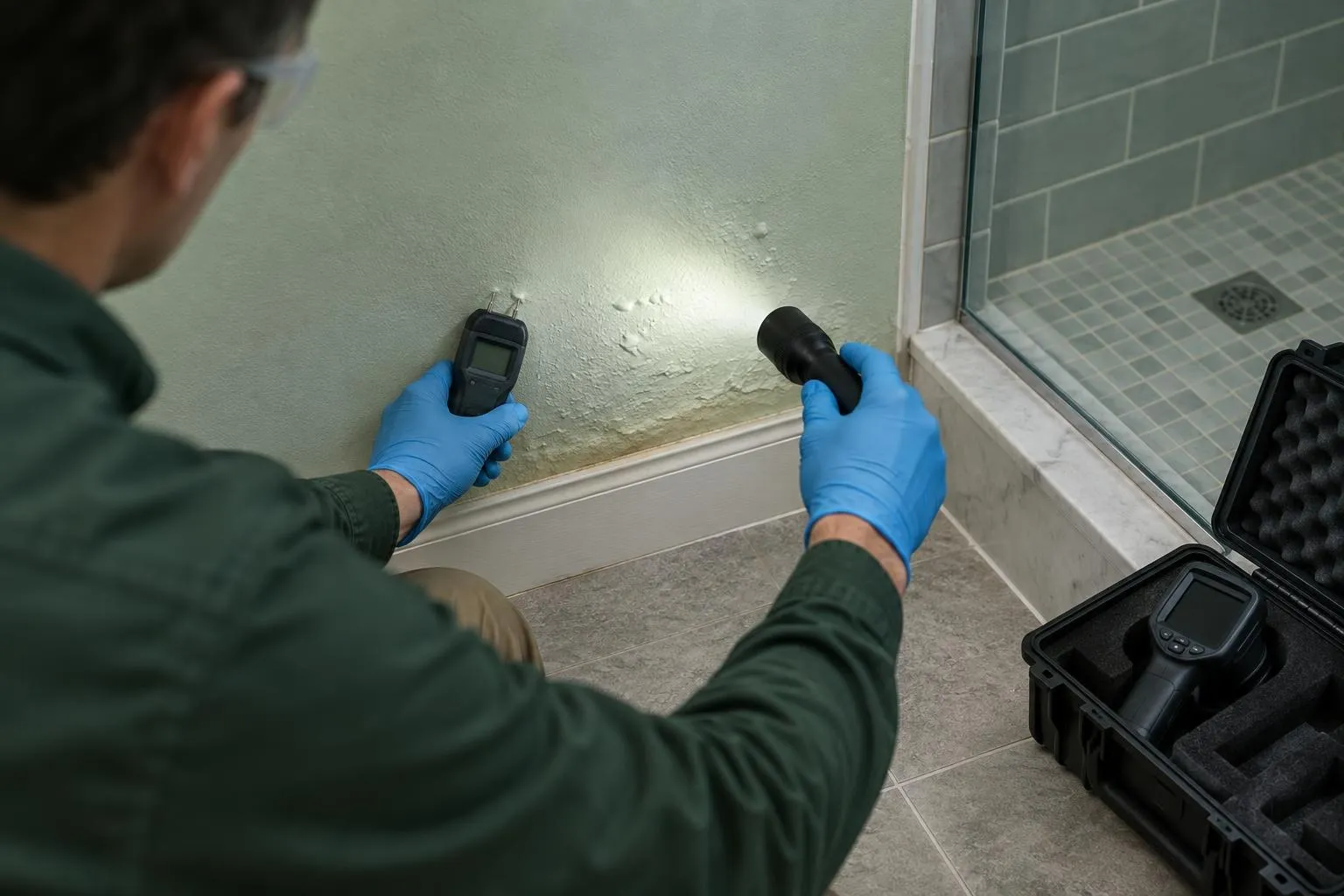
| Moisture mapping | Inspector’s visual assessment + equipment | Same (AI doesn’t see moisture) | Tie (human still leads) |
| Client consultation | Direct conversation | (AI has no role here) | Human |
| Remediation recommendations | Professional judgment | (AI can flag risks; human decides) | Human (final call) |
Reality Check:You’ve probably heard “AI will do your job faster.” Sure, but what job? If you think your value is sitting in a lab counting spores, you’re already worried for the wrong reason. If your value is walking into a water-damaged building, asking the right questions, and knowing exactly where to sample—that’s not going away.
The Numbers (And What They Actually Mean)
Let’s ground this in real data, not hype.
One mold inspection and testing firm deployed an AI outbound system and generated 161 leads and 20+ monthly calls. Did it replace the inspector? No. It freed them to focus on converting leads and closing inspections instead of chasing prospects. Different use of time, better outcomes.
NIST research shows AI-based mold identification surpasses traditional methods in accuracy and consistency. That’s not a threat—it’s a tool that makes your lab work faster and your reports more defensible. In a liability-heavy field, that’s money in the bank.
The really interesting data point: Custom AI vision systems achieve 99.86% accuracy on product inspection. That’s in manufacturing, not environmental testing, but it shows what’s possible when you train machine learning on thousands of images. The mold world is moving in the same direction. Generative AI, trained on vast mold databases, is reducing misidentification and speeding species classification.
What’s not happening? Job displacement statistics don’t exist because displacement isn’t occurring. Instead, we’re seeing efficiency gains—faster results, lower costs, and higher sample coverage. The firms adopting this technology are growing, not downsizing.
Pro Tip:If you’re not using AI analysis tools yet, your competitors are. The question isn’t whether AI will become standard in mold testing. It’s whether you’ll be behind the adoption curve or ahead of it. Start exploring vendors who integrate AI with your current lab workflow, not ones asking you to replace everything at once.
What’s Actually Changing (And What’s Not)
The trends breaking through in 2024 and beyond tell a clearer story than crystal-ball predictions:
Real-time monitoring and IoT integration are becoming the norm. Instead of waiting for scheduled inspections, property managers can monitor air quality continuously with sensors and get alerts when conditions trigger thresholds. This doesn’t eliminate inspections—it triggers smarter ones. You’re responding to data, not guessing.
Digital twins and predictive modeling are shifting the conversation upstream. Instead of “We have mold,” it becomes “Based on humidity, temperature, and airflow patterns, mold risk is 78%.” That’s valuable for insurance, property management, and remediation planning. And it requires interpretation, which is your job.
Scheduling and client communication are being automated by generative AI. Back-and-forth emails about appointment times, rescheduling due to weather, sending reminders—that’s being handled by systems trained to handle logistical complexity. One less busywork layer between you and actual work.
Field reporting is getting faster. Instead of dictating notes and waiting for transcription, you’re using AI to capture, transcribe, and structure findings in real-time. Reports that took an hour to compile take 15 minutes. Same quality, less friction.
But here’s what isn’t changing: Nobody’s sending a robot into someone’s crawlspace to decide if that discoloration is active mold or old water staining. Nobody’s replacing the conversation with a homeowner about why opening windows in summer can make things worse. Nobody’s automating the moment when you explain that the $8,000 remediation is necessary because the alternative is structural rot and health risk.
Reality Check:The firms panicking about AI are usually the ones who haven’t automated their own back-office work. If you’re still hand-entering data, manually scheduling, transcribing notes, or waiting for lab reports to trickle in—you’re not losing ground to AI. You’re losing ground to competitors who aren’t wasting 20 hours a week on busywork.
The Practical Bottom Line
AI isn’t replacing mold inspectors. But it’s sorting them into two categories:
Category 1: Augmented Professionals who use AI to eliminate repetitive work, deliver faster reports, improve accuracy, and spend time on the parts of the job that require judgment and communication. These inspectors are growing their business.
Category 2: Traditional-Only Practitioners who still rely entirely on manual processes, days-long lab turnarounds, and inconsistent documentation. They’ll face pricing pressure from more efficient competitors and slower growth.
Your move is straightforward:
-
Audit your current workflow. Where do you lose the most time? Data entry? Waiting for lab results? Scheduling? These are the places AI creates immediate value.
-
Talk to your lab about AI-integrated analysis. Ask whether they offer faster turnarounds with AI-assisted species identification and spore counting. If not, ask why.
-
Explore AI tools for scheduling and client communication. Generative AI can handle 80% of your back-and-forth without removing your personal touch from the parts that matter.
-
Double down on the work only you can do. More efficient analysis means more time for field consultation, challenging cases, expert testimony, and building relationships with remediation partners.
The honest answer: AI will change the mold inspection industry. It’s already doing it. The question isn’t whether it will. The question is whether you’ll lead that change or react to it.
For a deeper dive into the profession, check out our Complete Guide to Mold Inspectors. And if you’re curious how AI is reshaping related fields, see how moisture assessment and indoor air quality testing are evolving.
Done reading? Get quotes from mold inspectors near you.
Takes about a minute. Free, no obligation; providers reply to you directly.
Popular cities:
Nick built this directory to help homeowners find credentialed mold inspectors without wading through contractors who mostly want to sell remediation — a conflict of interest he ran into when trying to assess his own home after a plumbing leak.