Get free quotes from mold inspection near you
Takes about a minute. Free, no obligation; providers reply to you directly.
You’re sitting in your lender’s office, three weeks from closing, and the home inspector just flagged “possible mold in the crawlspace.” Your real estate agent shrugs. Your inspector gives you a number for “someone who does that kind of thing.” So you Google “mold inspector near me,” get hit with seven different prices ranging from $250 to $1,500, and zero way to know if the $300 quote is a bargain or a setup for a worthless report.
I’ve watched this scenario kill deals and drain bank accounts. The honest truth: most homeowners don’t know what a mold inspector actually does, what certification means, or why one firm charges triple another. And the industry? It’s designed to stay murky. Inspectors often tie themselves to remediation companies (hello, conflict of interest), certifications vary wildly by state, and pricing is about as transparent as fog in a basement.
Here’s what I found after digging through current data, state regulations, and real inspector quotes: there’s a right way to hire a mold inspector, and it’s nothing like what most people do.
The Short Version:A certified, independent mold inspector costs $300–$700 for a standard residential inspection (visual assessment + 2–3 samples sent to a lab). Verify their IICRC, ACAC, or NORMI certification before hiring. Never hire an inspector who also does remediation. Get a written quote that breaks down sample fees and lab costs upfront.
Key Takeaways
- Mold inspectors should be independent — not owned by or referring to remediation companies.
- Certification matters: IICRC, ACAC, NAMP, and NORMI (CMA/CMI) are the legitimate credentials; verify them in online registries.
- 2026 pricing ranges from $150 (visual-only for small homes) to $2,500+ (large commercial buildings), with $450–$600 being the competitive sweet spot for residential.
- State licensing is not required everywhere, but some states (like New York) mandate specific credentials if mold is discovered.
- Professional inspections ($300–$800) beat DIY kits ($150–$200) for insurance claims, home sales, and legal situations.
What a Mold Inspector Actually Does (And What They Don’t)
Most people think a mold inspector shows up, squints at your walls, and declares a verdict. That’s not it.
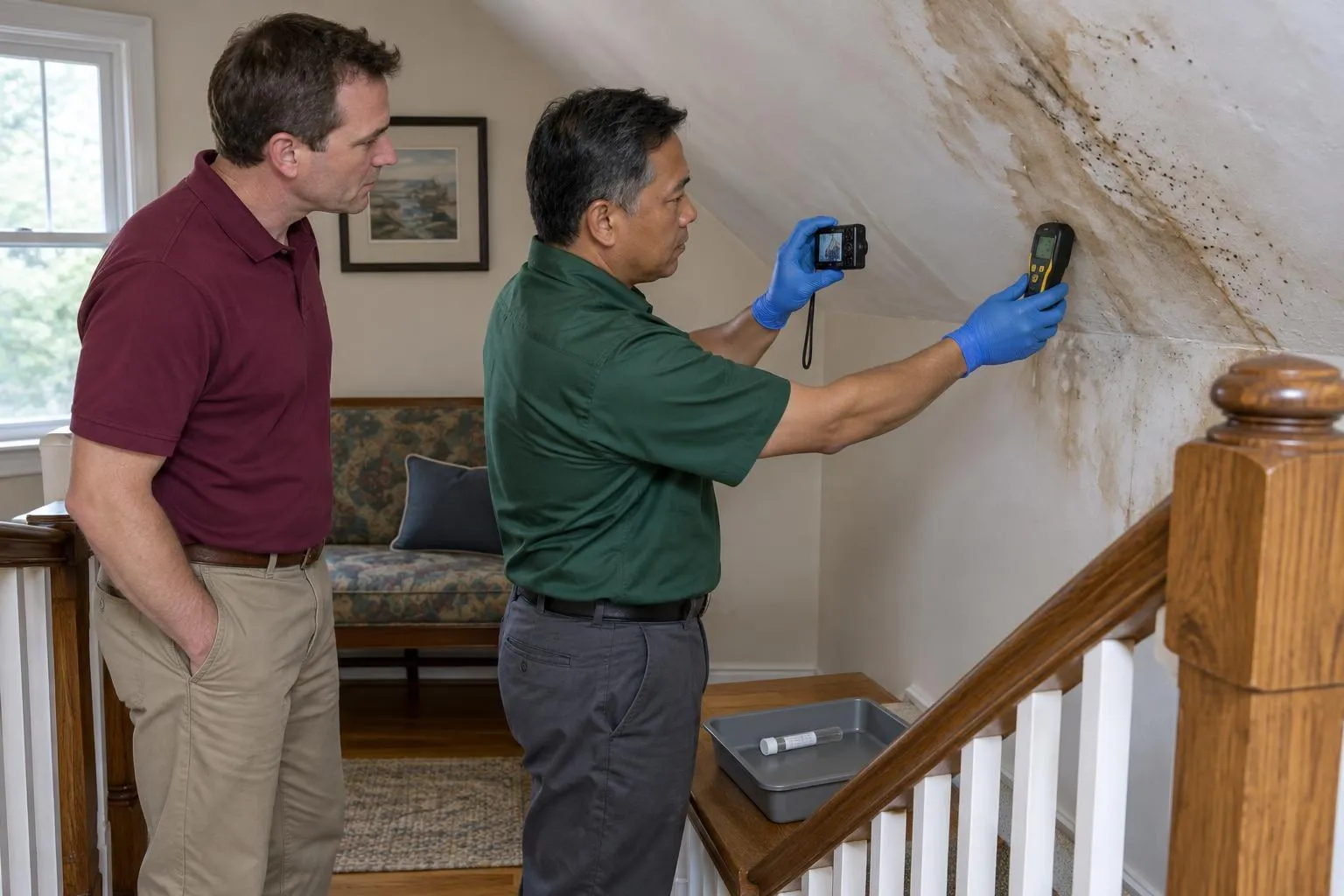
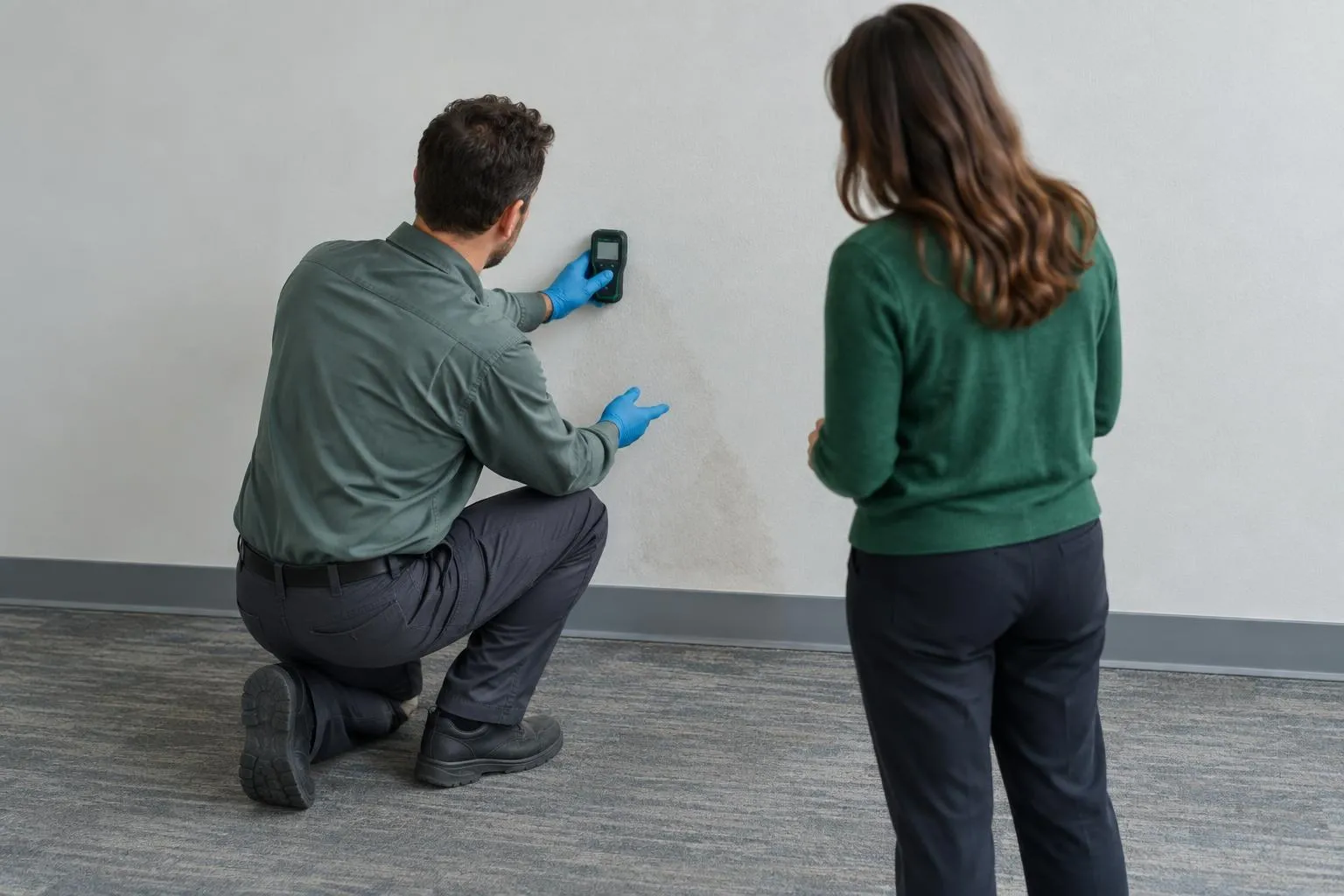
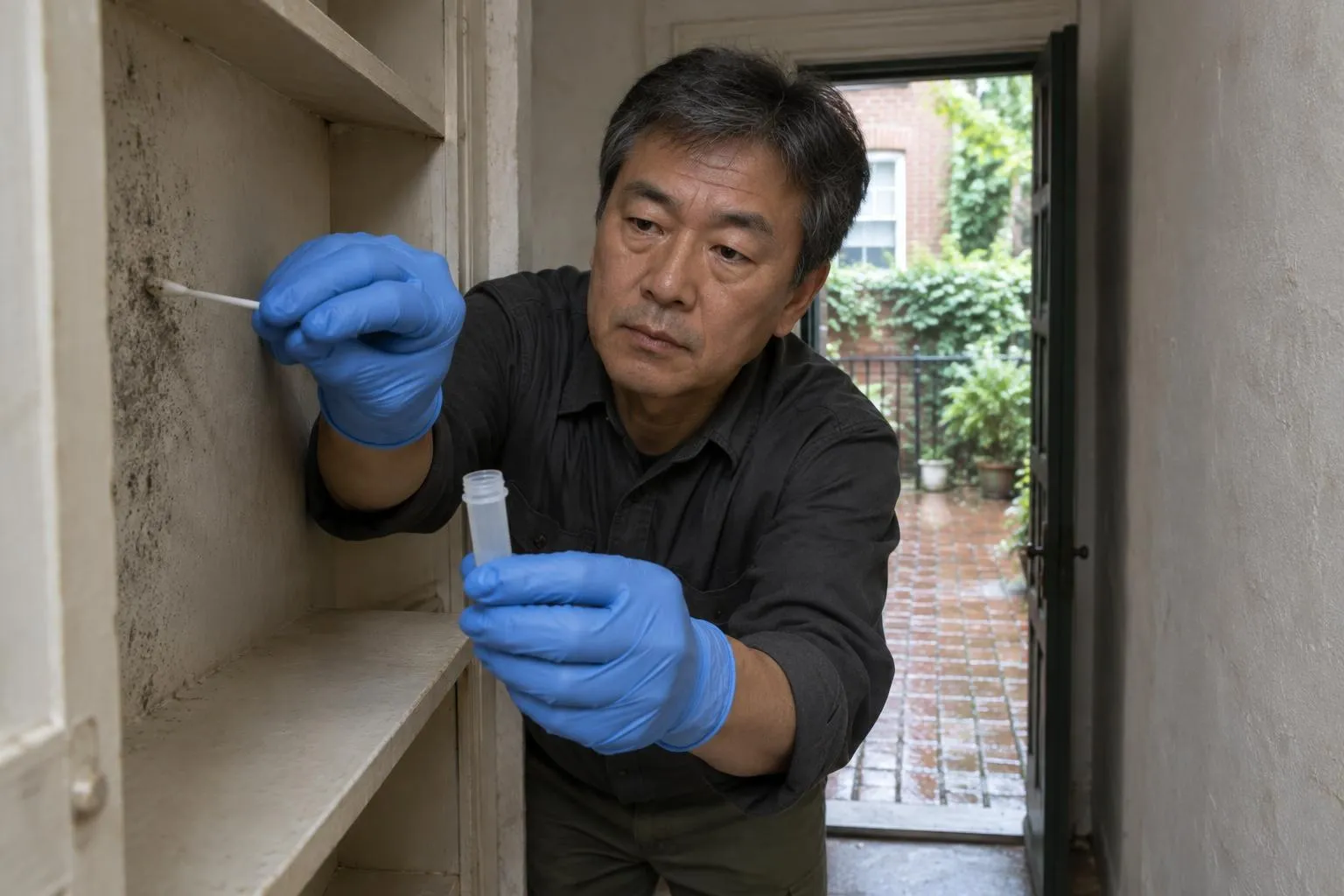
A real inspection is three-part: visual assessment, moisture mapping, and sampling. The inspector walks the property with a moisture meter, looking for discoloration, water stains, soft spots, and HVAC concerns. They’re not diagnosing medical problems — they’re documenting environmental conditions. If mold is visible or suspected, they collect air and/or surface samples and send them to an accredited third-party lab for species identification and spore concentration analysis.
The report comes back with findings, a diagram of where samples were taken, lab results, and recommendations (usually “remediate if spore counts exceed EPA guidance” or “monitor humidity levels”). That’s it. They don’t tell you to fix it, don’t hire themselves to fix it, and don’t refer you to their brother-in-law who happens to do remediation.
Here’s what most people miss: A mold inspector’s job is to answer one question: “Is there a mold problem?” They’re not contractors, handymen, or remediation specialists. If an inspector starts quoting you fixes or offering to “handle it themselves,” you’re talking to the wrong person.
The Real Cost Breakdown (2026 Pricing)
Pricing varies by scope, geography, and home size. Here’s what you’ll actually see:
| Inspection Type | Price Range | What You Get |
|---|---|---|
| Visual-only (small homes, no samples) | $150–$300 | Moisture meter readings, visual documentation, written summary. Good for peace of mind; won’t hold up in insurance claims. |
| Standard residential (visual + 2–3 samples) | $300–$700 | Full walkthrough, air/surface samples sent to lab, detailed report with findings and recommendations. Market standard. |
| Comprehensive (thermal imaging + 5+ samples) | $700–$1,500+ | Everything above, plus thermal camera to find hidden moisture, multiple sample locations, extensive lab analysis. |
| Air testing only (large properties) | $400–$600 | Spore count analysis without visual assessment. Often used post-remediation or for ongoing monitoring. |
| ERMI dust analysis | $300–$600 (pro) / $200–$350 (DIY) | Environmental Relative Moldiness Index; analyzes 36 mold species in dust. Useful for assessing historical exposure. |
| Post-remediation verification | $200–$500 | Clearance testing to confirm remediation worked. Often required by lenders or insurance. |
| Commercial (offices, warehouses) | $750–$2,500+ | Scope depends on building size, number of floors, and HVAC complexity. Rarely cheaper than $750. |
Reality Check: Watch for hidden lab fees. A quote of “$300 inspection” might jump to $450 once you add sample analysis. Ask: “What’s included in your quote, and what costs extra?” The legitimate answer is transparent, itemized, and written.
Pro Tip: The sweet spot for residential purchases or insurance claims is the “standard” tier ($450–$600). It’s defensible in court, acceptable to lenders, and detailed enough to actually guide remediation decisions.
Certifications: What’s Real, What’s Marketing
This is where the mold inspection industry gets deliberately confusing. There’s no federal license, and state requirements vary wildly. What exists are professional certifications from third-party organizations.
The legitimate credentials:
- IICRC CMR (Certified Mold Remediation Inspector) — Institute of Inspection, Cleaning and Restoration Certification. Gold standard for knowledge and ethics. Requires coursework, exam, and continuing education. Verify here: iicrc.org.
- ACAC CMC/CMRS — American Council for Accredited Certification. Another strong credential; requires exam and field experience. Check registries at acac.org.
- NAMP CMA (Certified Mold Analyst) — National Association of Mold Professionals. Solid entry-level cert; more accessible but still meaningful. Verify at namp.org.
- NORMI CMA/CMI — National Organization of Remediators and Mold Inspectors. Credible certification; less well-known but respected in the field.
- InterNACHI Certified Mold Inspector — Home inspection association’s mold credential. Growing in popularity; verify at internachi.org.
What doesn’t prove anything:
- “Mold Certified” (generic, meaningless)
- “Specialist” (self-declared, unverified)
- Online courses you can finish in an afternoon for $50
State-Specific Rules:
New York mandates a Mold Assessment License (§931 DOL) if mold or conditions conducive to mold are found during an inspection. A few other states have similar rules. Before hiring, ask: “What certifications do you have?” and “Are you licensed in this state?” Then verify directly with the certifying body — don’t take their word for it.
Pro Tip: Independent inspectors with IICRC, ACAC, or NORMI credentials are your safest bet. Look for memberships in trade associations (which require ongoing education and ethics standards) over isolated online certifications.
How to Actually Hire One (Without Getting Ripped Off)
The hiring process matters more than the price. Here’s the playbook:
Step 1: Verify Independence Call and ask: “Do you own or affiliate with any mold remediation companies?” If the answer is anything other than a clear “no,” hang up. Conflict of interest is poison. Independent inspection firms are your target.
Step 2: Check Certifications in Real Time Don’t believe their website. Go directly to IICRC.org, ACAC.org, or NAMP.org and search their name. If they claim a cert you can’t verify, they’re lying.
Step 3: Ask About Their Lab Ask: “Which lab do you use?” A reputable inspector uses an accredited third-party lab, not in-house testing. Why? In-house labs have an incentive to find problems. A real inspector sends samples out, gets impartial results, and reports them honestly.
Step 4: Request References and Insurance Ask for three homeowner references (not just happy clients — ask specifically about cases where they found no mold or advised against expensive remediation). Verify they carry liability insurance and workers’ comp. This protects you if something goes wrong.
Step 5: Get a Written Quote No verbal estimates. You need itemized pricing showing:
- Base inspection fee
- Per-sample cost
- Lab analysis cost
- Report delivery method
- Timeline
If they can’t or won’t write it down, move on.
Step 6: Interview Two or Three Price-shop, but don’t hire the cheapest. A $150 visual-only from an unlicensed guy isn’t a deal — it’s a waste of money when you need actual documentation. Compare the certified, independent options in your $400–$650 range.
Reality Check: You’re not buying lawn service; you’re buying evidence that’ll survive scrutiny. An extra $100–$200 for a credible inspector is insurance money. Spend it.
DIY Kits vs. Professional Inspections
DIY mold testing kits cost $150–$200. They work like this: you collect a sample (usually air via a petri dish or a wipe), mail it to a lab, and get results in a week or two.
When DIY makes sense:
- You’re not in an active real estate transaction
- You have no insurance claim pending
- You just want a baseline spore count for your own curiosity
- You’re monitoring a known problem between professional visits
When DIY fails:
- A lender or insurance company asks for “professional inspection results” — DIY won’t qualify
- You need someone to testify that results are legitimate (chain of custody matters in disputes)
- You need context — DIY tells you “spore counts are X,” but doesn’t explain what caused it, where to look, or how serious it is
- You need recommendations — a lab result without professional interpretation is half-baked data
Pro Tip: If you’re already hiring a pro, skip the DIY kit. If you’re on the fence about whether you need a pro at all, a $150 kit is worth the peace of mind. But for home sales, insurance claims, or legal situations, professional inspection is non-negotiable.
Red Flags (The Stuff Nobody Tells You)
- Inspector quotes remediation cost. They’re not qualified to estimate that, and it’s a conflict of interest.
- They pressure you to “act fast.” Real mold problems don’t expire in 48 hours. Pressure sales are pressure sales.
- They recommend their own remediation company. Even if they claim it’s “separate,” don’t trust it.
- Certification can’t be verified online. Call the certifying body directly.
- They won’t give you lab reports. You own those results. You should get the original lab report, not a paraphrased summary.
- No written contract or quote. Verbal agreements are useless if something goes sideways.
- They test without telling you which rooms. A proper inspection documents exactly where samples were taken.
Practical Bottom Line
If you need an inspection, here’s the order:
- Confirm you actually need one. Visible mold? Musty smell? Water damage in the past 48 hours? Recent respiratory issues? Yes to any of these = hire an inspector.
- Verify independence. No remediation ties. Non-negotiable.
- Check certifications directly. IICRC, ACAC, or NORMI. Verify in their registries.
- Get a written quote. Itemized, transparent, includes lab costs.
- Ask for references. Call them. Ask about cases where no mold was found (honesty matters).
- Budget $450–$650 for residential. That’s the competitive rate for legitimate work. Cheaper often means corners cut.
- Get a detailed report. Visual photos, sample locations, lab results, and written recommendations tied to the data.
For home sales: Get the inspection before you close. It’s cheaper to walk away or renegotiate than to own someone else’s mold problem.
For insurance claims: Use a certified, independent inspector. Adjusters respect documented evidence; they hate DIY results.
For peace of mind: A standard inspection ($400–$600) is worth it if you’ve had water intrusion or suspect a problem. Skipping it to save $300 is penny-wise and pound-foolish.
Next steps: Find a certified inspector in your area using the IICRC or ACAC registries. Call three. Ask the questions above. Hire the one with verifiable credentials, independence, and clear communication. Trust the process — it exists for a reason.
Done reading? Get quotes from mold inspectors near you.
Takes about a minute. Free, no obligation; providers reply to you directly.
Popular cities:
Nick built this directory to help homeowners find credentialed mold inspectors without wading through contractors who mostly want to sell remediation — a conflict of interest he ran into when trying to assess his own home after a plumbing leak.