Get free quotes from mold inspection near you
Takes about a minute. Free, no obligation; providers reply to you directly.
A contractor shows up at your door with moisture meter in hand, spends 20 minutes poking around your basement, and hands you a bill for $180. “Mold-free,” they announce. You feel relieved until three months later—right after you close on the house—dark spots bloom across the crawlspace joists. The “inspection” never went into the attic. It never pulled air samples. It never tested for the stuff that killed the previous owner’s HVAC system.
You just learned an expensive lesson about what “cheap” actually means.
Key Takeaways
- Budget inspections ($150–$300) often rely on moisture meters alone and miss 100% of historical or dry mold growth
- Professional full inspections run $500–$1,500 and include air/surface sampling, lab analysis, and species identification
- DIY kits ($150–$200) can work for non-complex cases but lack mold type, spore counts, and remediation guidance
- The real cost of cutting corners isn’t the $200 you save upfront—it’s the $10,000+ remediation bill plus health risk you inherit
The Short Version
Cheap mold inspections can save you money upfront but will almost certainly cost you later. A low-cost moisture scan misses historical mold, hidden growth, and the root cause of the problem. If budget is tight, a DIY air-sampling kit beats a sketchy $150 inspection. If you’re buying property or dealing with water damage, hire a certified pro who does air and surface testing—the extra $300–$500 is insurance against discovering mold six months after you’ve already invested in the property.
What “Cheap” Actually Looks Like
Here’s what the numbers tell you: the average U.S. mold inspection costs $656. But you can find someone willing to do it for $150–$300.
That gap isn’t because someone discovered a more efficient process. It’s because they’re doing a fundamentally different service.
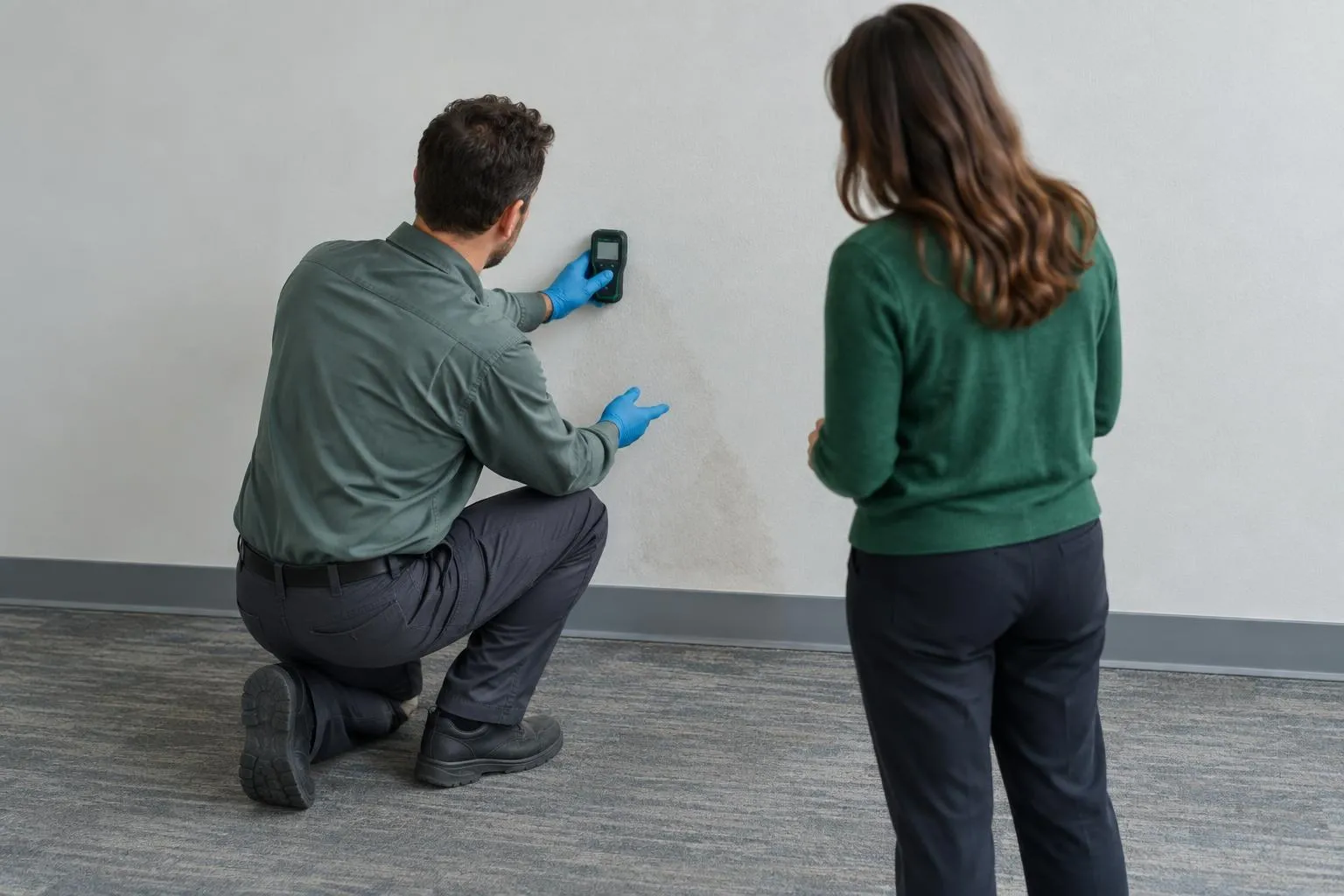
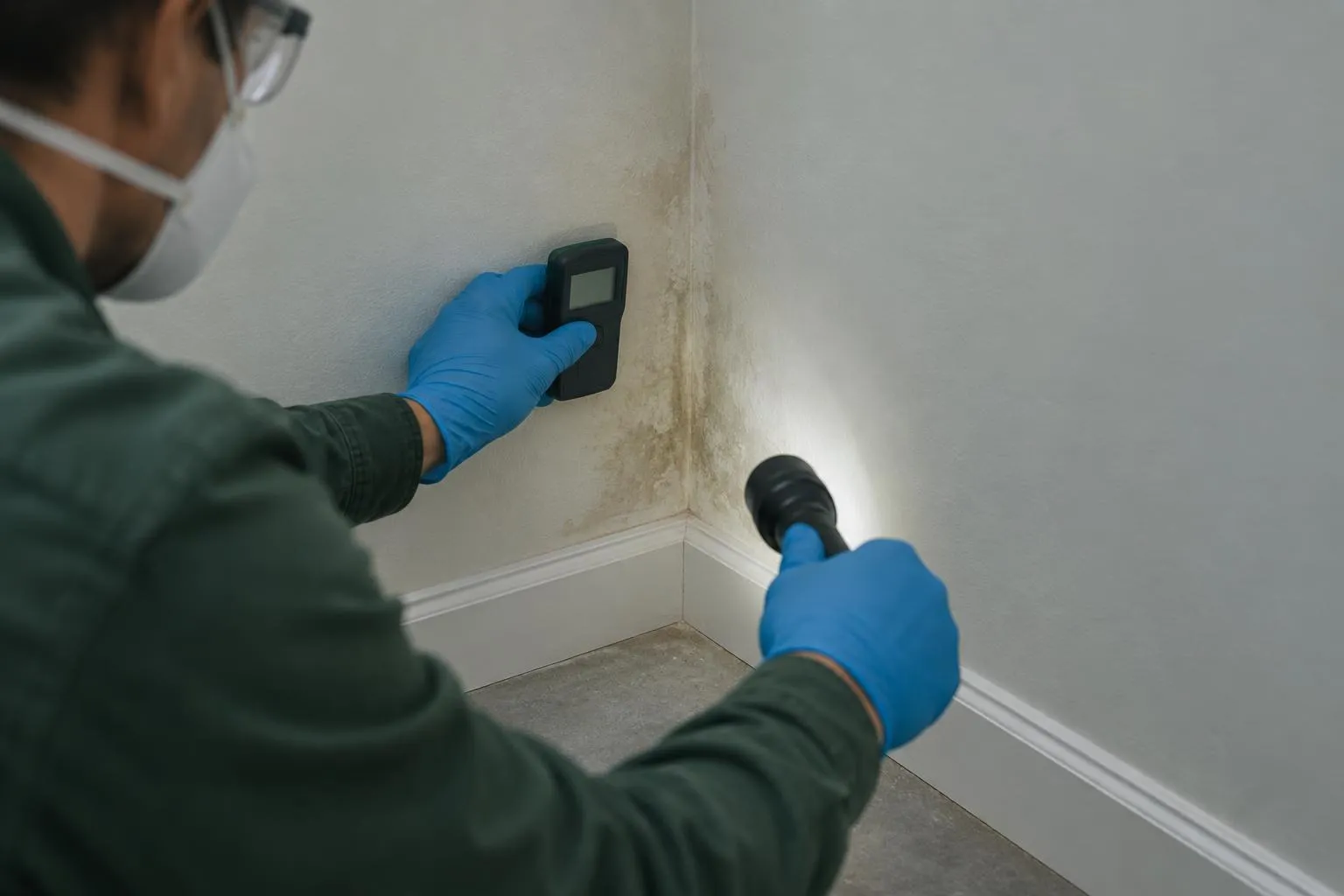
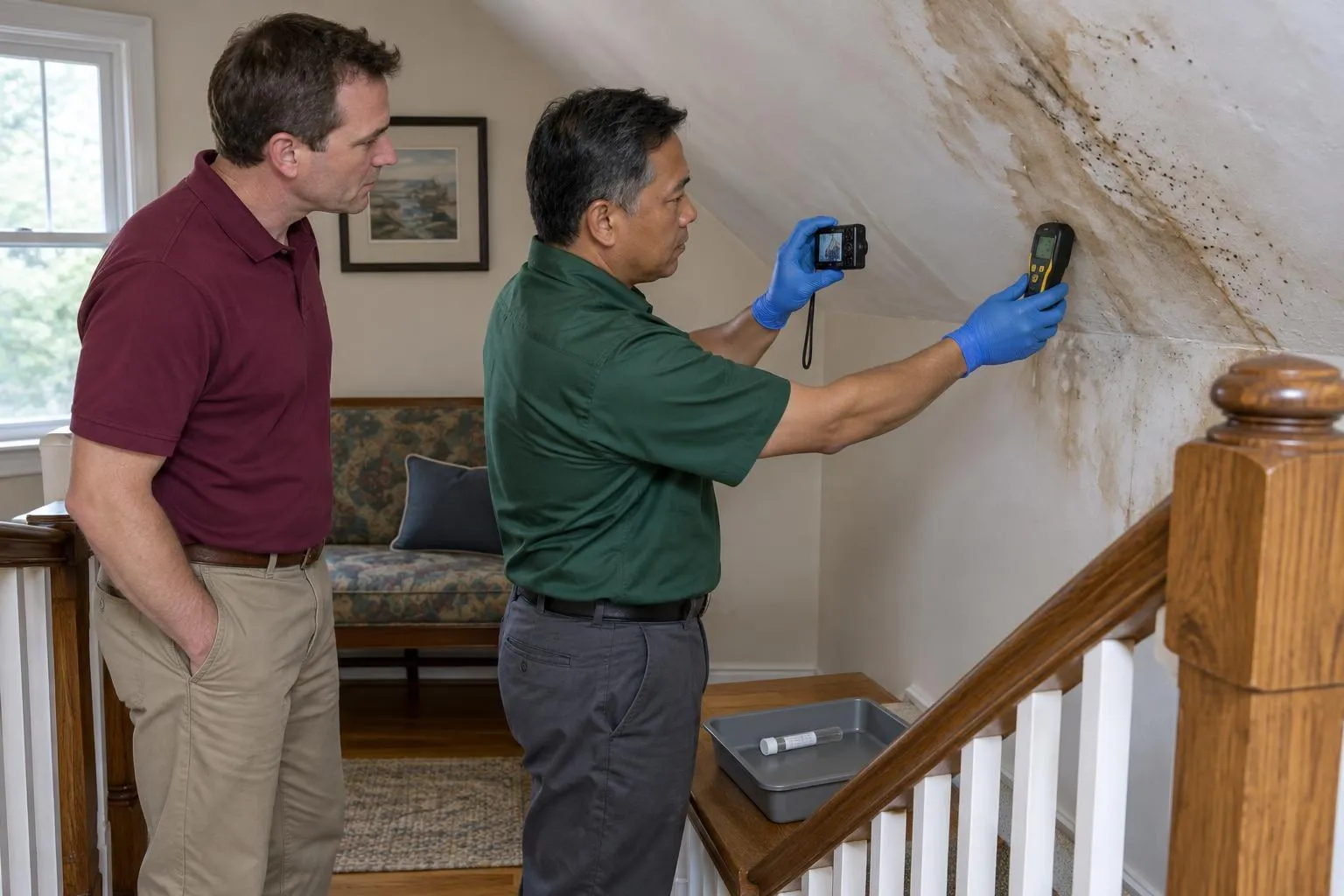
A $150–$300 “inspection” is usually a moisture-meter-only scan. The inspector walks through, waves a moisture meter around, takes a few photos, and calls it done. No air samples. No surface swabs. No lab analysis. No species identification. No guidance on what’s actually in your walls or why it got there.
According to industry research, these limited scans miss 100% of historical dry mold growth—exactly the stuff that’s been sitting in your attic for two years waiting to become a problem.
Reality Check:A moisture meter tells you if something is wet right now. It tells you nothing about mold that grew during last winter’s humidity spike and has since dried out. It also doesn’t distinguish between “slightly damp wood” and “actively molding drywall.”
Meanwhile, a comprehensive professional inspection ($500–$1,500 depending on property size) includes:
- Visual inspection with thermal imaging
- Moisture mapping of hidden spaces (attics, crawlspaces, wall cavities)
- Air sampling (spore counts and composition)
- Surface sampling from suspect areas
- Lab analysis identifying mold species and concentration (ERMI testing)
- A written report tying findings to root causes and remediation steps
These aren’t luxuries. They’re how you actually know what you’re dealing with.
The Hidden Fee Factory
Here’s where cheap inspections get dangerous: they’re not always cheap once you sign up.
A company quotes you $200 for an “inspection,” you say yes, they show up with a moisture meter, and then they tell you they need to pull air samples for $150 per sample. Interpretation of those samples? Another $100–$200. Lab work? That’ll be extra.
Suddenly your $200 inspection is $600, and you have no baseline for whether those prices are fair or if you’re getting upsold on unnecessary tests.
Pro Tip:Get a detailed quote in writing before anyone shows up. It should include the inspection fee, how many samples will be taken, lab analysis costs, and a ballpark timeline. If a company won’t itemize upfront, that’s your signal to keep looking.
The other problem with cheap inspections is the upsell vector. When an inspection firm also offers mold remediation, they have a financial incentive to find problems—or at least to recommend solutions that feel more urgent than they are. A moisture-only scan makes it harder to challenge their conclusions because they didn’t use rigorous testing. You’re trusting their eyeball and their word.
That’s why the smartest move is hiring an inspection-only firm that doesn’t touch remediation. No conflict of interest. No incentive to oversell.
When DIY Actually Makes Sense
Here’s where I’ll push back on “always hire a pro”: for non-complex situations on a tight budget, DIY air-sampling kits deliver 60–80% of the value at 60–80% of the cost.
A kit runs $150–$200 (some ERMI kits go up to $350), includes lab analysis, and takes 5–7 days for results. You’re not paying for someone’s truck, certification, or thermal camera—you’re just paying the lab.
The catch: DIY kits work best when you’re:
- Sampling a single room, not a whole house
- Dealing with a suspected area (post-water-damage, obvious discoloration)
- Trying to rule something in or out before spending $1,000 on a full pro inspection
What DIY won’t do: It won’t give you species identification, spore counts in context of health standards, or actionable guidance on root causes. A lab will tell you “spore count is elevated,” but they won’t tell you whether that’s the mold from the basement leak or ambient spores from outside. A pro inspector interprets that data and explains what it means for your property and your next steps.
Real-World Cost Comparison
Here’s what you’re actually choosing between:
| Service | Cost | What You Get | Best For |
|---|---|---|---|
| Low-Cost “Inspection” | $150–$300 | Moisture meter scan, photos, brief report | Quick reassurance (not reliable) |
| DIY Air-Sampling Kit | $150–$200 | Lab analysis of spore count, 5–7 day turnaround | Non-urgent sampling; pre-screening |
| Professional Basic | $400–$600 | Visual + moisture + thermal imaging; no lab testing | Narrow scope; moisture-specific issues |
| Professional Full | $500–$1,500 | Comprehensive visual, moisture mapping, air + surface sampling, lab analysis, species ID, remediation plan | Home purchase, post-water-damage, health concerns |
| ERMI Testing (Pro) | $400–$600 | 36-mold-species analysis, quantified moldiness index | Detailed assessment for health risk |
Notice the overlap? A $600 DIY kit plus a $400 professional moisture inspection could beat a $150 low-cost scan by a mile—and still cost less than a full $1,000+ inspection.
The math depends on your situation.
What Goes Wrong: The Real Costs of Skipping Steps
Cheap inspections fail in predictable ways:
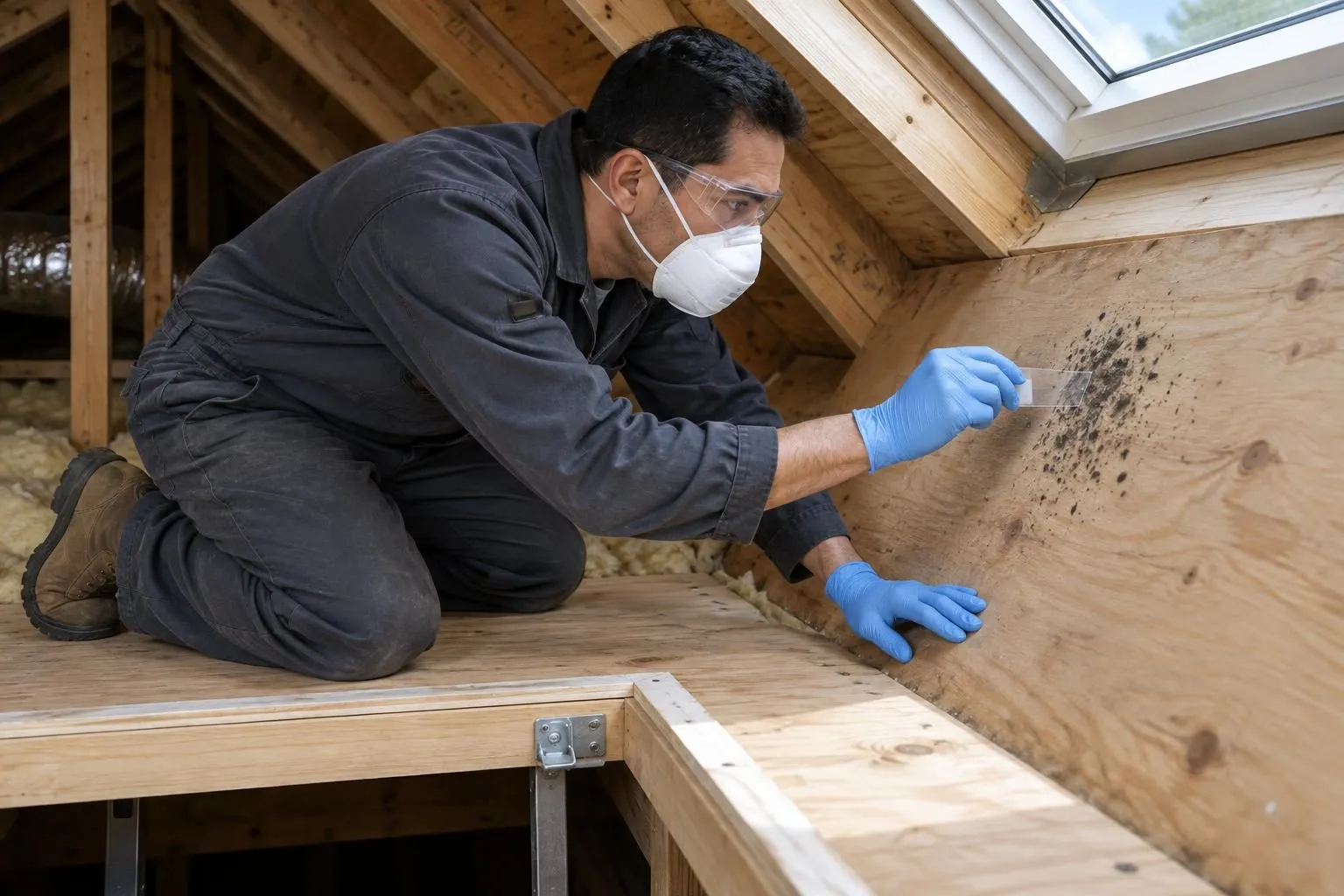
The Attic Problem: You buy a house, the $200 inspection clears it, six months later you get a roof leak. Water drips into the attic for two weeks before anyone notices. The inspector never went up there.
The Crawlspace Problem: Moisture meters said the crawlspace was fine. No air sample was taken. Year two, the joists start to rot and your HVAC develops a musty smell. A $1,500 pro inspection would have caught the spore load and recommended moisture control. Instead, you’re now facing $8,000 in remediation.
The Confidence Trap: The $150 inspector said you’re clear. No documentation to support it. No species ID. No spore counts. When problems emerge later, you have nothing to show an insurance company or a lawyer. The “inspection” might as well have never happened.
Reality Check:You can’t unsee mold. But you can un-know about it—by hiring someone who wasn’t thorough enough to find it. That’s not actually better. That’s just delayed disaster.
For properties above 4,000 square feet, a low-cost inspection is almost guaranteed to miss things. Large homes need multiple air samples from different zones, thermal imaging of larger areas, and more time in crawlspaces and attics. A $200 inspection simply can’t cover that ground.
The Practical Bottom Line
If you’re deciding whether to cheap out on a mold inspection, ask yourself this: What’s the cost of being wrong?
- Buying a house with hidden mold: $5,000–$15,000 in remediation, plus potential health issues and resale complications
- Ignoring post-flood mold: $8,000–$20,000 depending on affected square footage
- Discovering mold after you’ve already invested: Compounded cost and regret
Against that backdrop, paying $500–$1,500 for a thorough inspection is simply risk management.
Here’s your decision tree:
-
You’re buying property or dealing with water damage? Hire a certified professional with air/surface sampling and lab analysis. Non-negotiable. Your future self will thank you.
-
Budget is tight but you want baseline data? Start with a DIY air-sampling kit ($150–$200). If results are elevated or inconclusive, upgrade to a pro inspection.
-
You’ve had a pro inspection and want to verify post-remediation? A focused follow-up inspection ($200–$500) is reasonable and often required by remediation companies anyway.
-
Someone is offering you a $150 “inspection”? Ask what it includes. If it’s moisture-only, skip it. Either do DIY sampling or go straight to a full professional inspection. The middle ground is a trap.
Next Steps
Ready to hire the right person? Start by asking for certifications (CMI, ACAC CMC/CMRS) and confirmation that they don’t also do remediation work. Get that quote in writing, including all samples and lab analysis. Check the timeline—legit results take 5–10 days because they’re waiting on the lab.
For more on what a quality inspection actually includes, see our Complete Guide to Mold Inspectors. And if you’re in a specific area, we’ve got city-specific guides to help you find certified professionals near you.
The cheapest inspection is the one that turns out to be accurate. Everything else is just a different way of losing money.
Done reading? Get quotes from mold inspectors near you.
Takes about a minute. Free, no obligation; providers reply to you directly.
Popular cities:
Nick built this directory to help homeowners find credentialed mold inspectors without wading through contractors who mostly want to sell remediation — a conflict of interest he ran into when trying to assess his own home after a plumbing leak.