Get free quotes from mold inspection near you
Takes about a minute. Free, no obligation; providers reply to you directly.
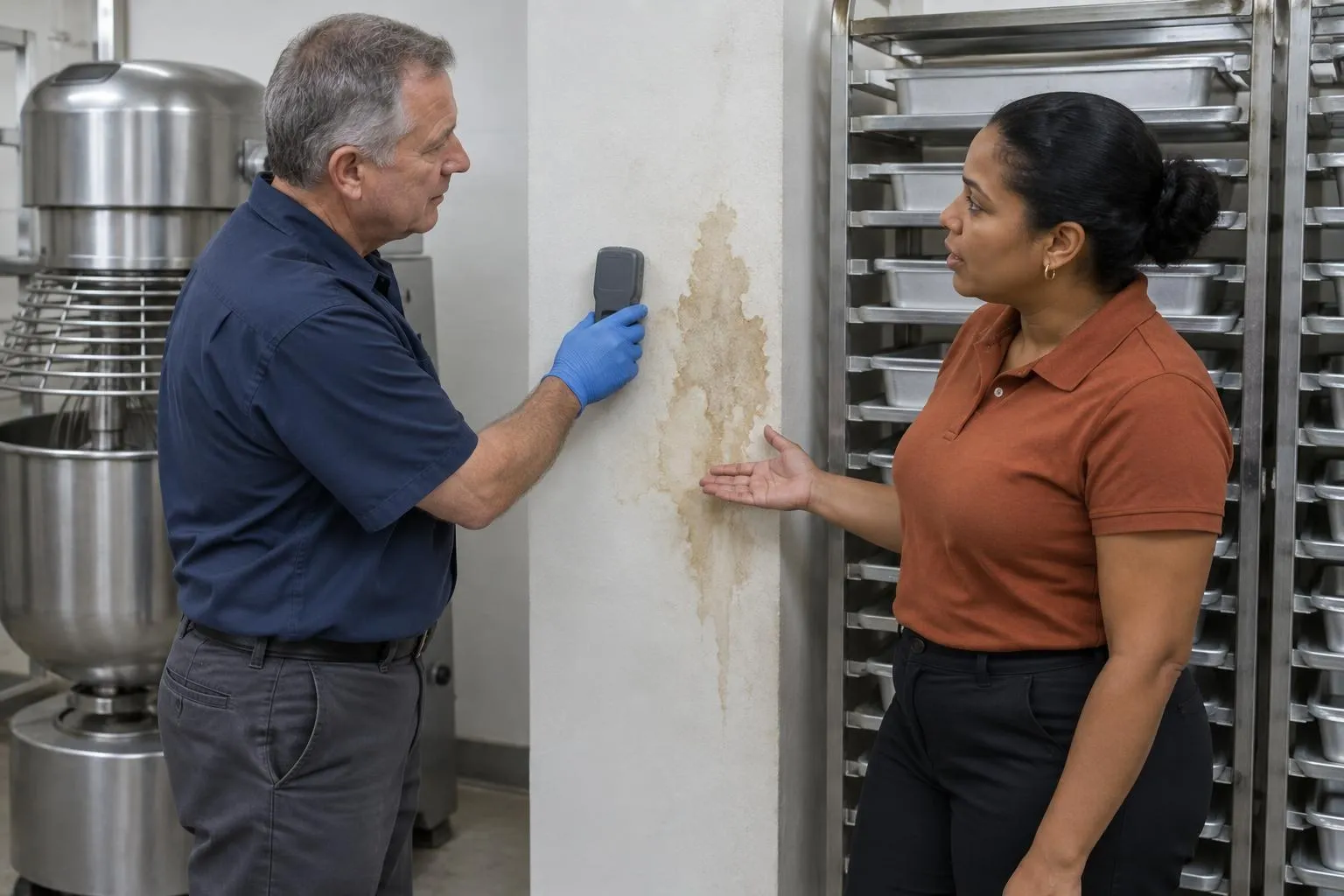
I got a call at 2 PM on a Thursday from a facility manager at a commercial warehouse. He’d hired a mold inspector the week before—paid $1,200, got a report by Friday. Looked legit. But when the same company showed up Monday morning with a remediation quote for $45,000, something felt off. Turns out, the “inspector” was also the remediation contractor. Same person profited from finding the problem and fixing it. He’d never actually verified if that mold was dangerous or just surface moisture. That facility manager learned the hard way: asking the wrong questions to a mold inspector can cost you tens of thousands of dollars and a lot of sleepless nights.
The Short Version:Before hiring a mold inspector, verify they’re independent (no remediation conflicts), properly certified (IICRC, NORMI, or ACAC), insured with E&O coverage, and have completed 1,000+ inspections. Ask about their testing methodology, equipment, and whether they provide comprehensive reports with photos. If they can’t answer these questions clearly, keep looking.
Key Takeaways
- Independence is non-negotiable. A company that both inspects and remediates has a financial incentive to find problems. Third-party inspection eliminates this conflict.
- Certifications matter, but experience matters more. Real credentials (IICRC, NORMI, ACAC) should be paired with 1,000+ completed inspections.
- The inspection process reveals the professional. Professional-grade equipment (thermal imaging, moisture meters, sampling kits) and non-invasive methodology separate specialists from generalists.
- Testing should go to real labs, not store-bought kits. Credible analysis requires third-party lab verification, not DIY mold test strips.
15 Critical Questions to Ask Before Hiring a Mold Inspector
1. Do you provide both inspection AND remediation services?
This is the filter question. If the answer is yes, move on to the next company. A fundamental conflict of interest exists when one firm profits from finding mold and from fixing it. You need an independent inspector who has zero financial incentive to either exaggerate or downplay what they find. Good answer: “We only inspect. We’re not licensed to remediate, and we don’t refer to preferred contractors—we just give you the data.”
2. What certifications do you hold, and from which organizations?
Look for credentials like IICRC (Institute of Inspection, Cleaning, and Restoration Certification), NORMI (National Organization of Remediators and Mold Inspectors), ACAC (American Council for Accredited Certification), WRT (Water Restoration Technician), or PMII (Professional Mold Institute). These aren’t guaranteed; they’re entrance fees to legitimacy. Bad answer: “I’ve been doing this for 20 years.” Good answer: “I hold IICRC CMI certification and maintain it with 16 hours of continuing education annually.”
3. How many mold inspections have you completed?
Industry standard is 1,000+ completed inspections before someone’s qualified to handle commercial properties reliably. Anyone below that threshold is still learning on your dime. They should know this number cold without having to think about it.
Reality Check:A company claiming 500 inspections in 3 years (that’s 3+ per business day) is either rushing through jobs or exaggerating. Real thoroughness takes time.
4. Is mold inspection your primary business, or is it one service among many?
Specialists who focus exclusively on mold inspection have deeper knowledge and better equipment than generalists. A company that does “water damage, mold, asbestos, lead paint, and radon” spreads thin. Good answer: “Mold inspection and air quality assessment is 90% of what we do.”
5. Do you carry Professional Liability Insurance (E&O insurance)?
E&O insurance is expensive and rare—most mold inspection firms don’t have it. But if they do, it’s a signal they’ve bet money on their competence. It also protects you if their report misses something significant. Ask to see proof of current coverage.
6. Are you a member in good standing with the Better Business Bureau?
BBB membership doesn’t guarantee quality, but it’s a baseline check for complaints and resolution history. A company with a strong rating and transparent complaint history demonstrates accountability. If they avoid this question, that’s its own answer.
7. Walk me through your inspection process—do you start on the exterior?
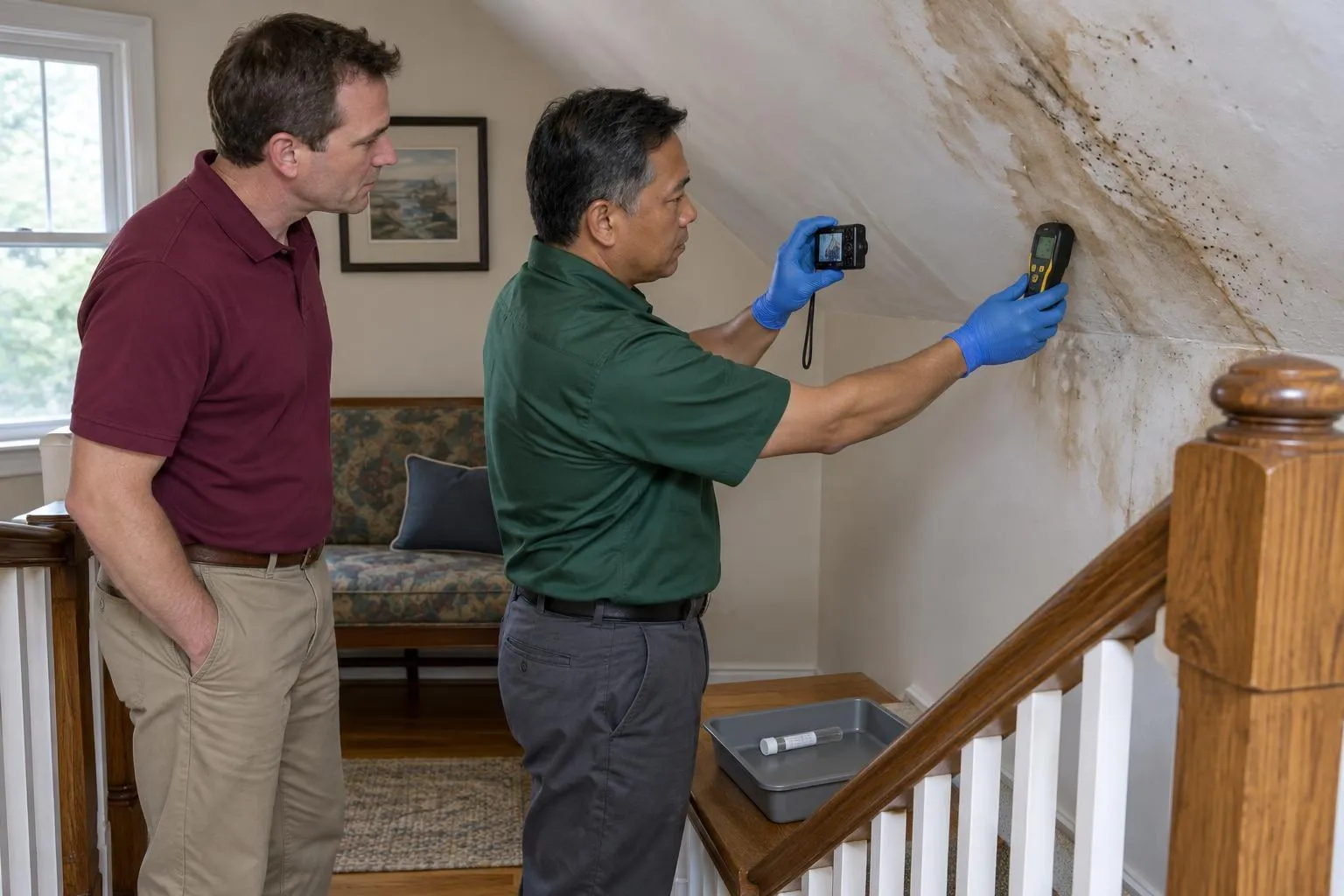
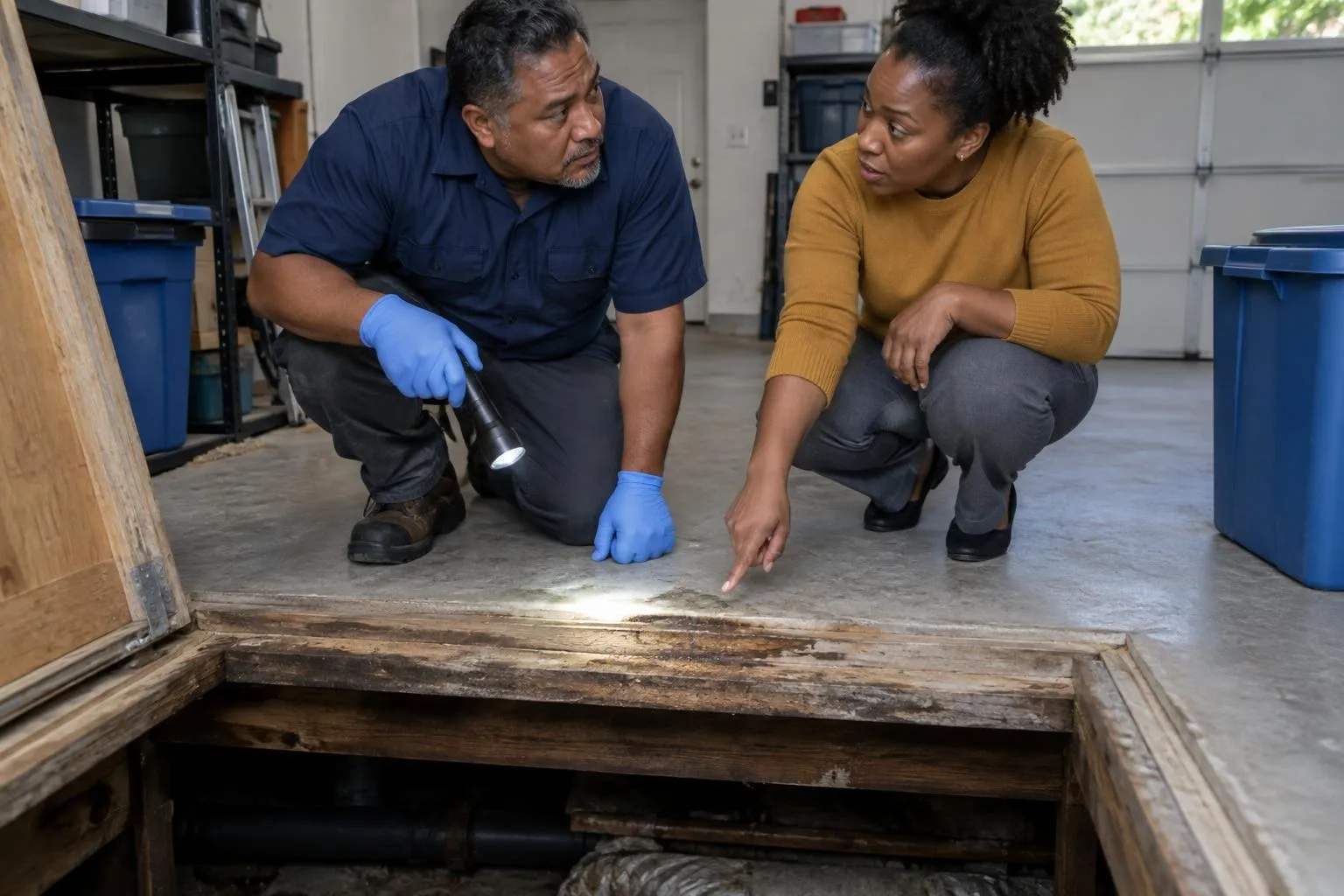
Water intrusion pathways often begin outside (damaged gutters, foundation cracks, roof leaks) and show up as interior mold later. A thorough inspection always starts exterior. Listen for language like “thermal imaging to map moisture pathways” and “systematic documentation of potential entry points.” Vague answers like “we look around and take pictures” are red flags.
8. What equipment will you use during the inspection?
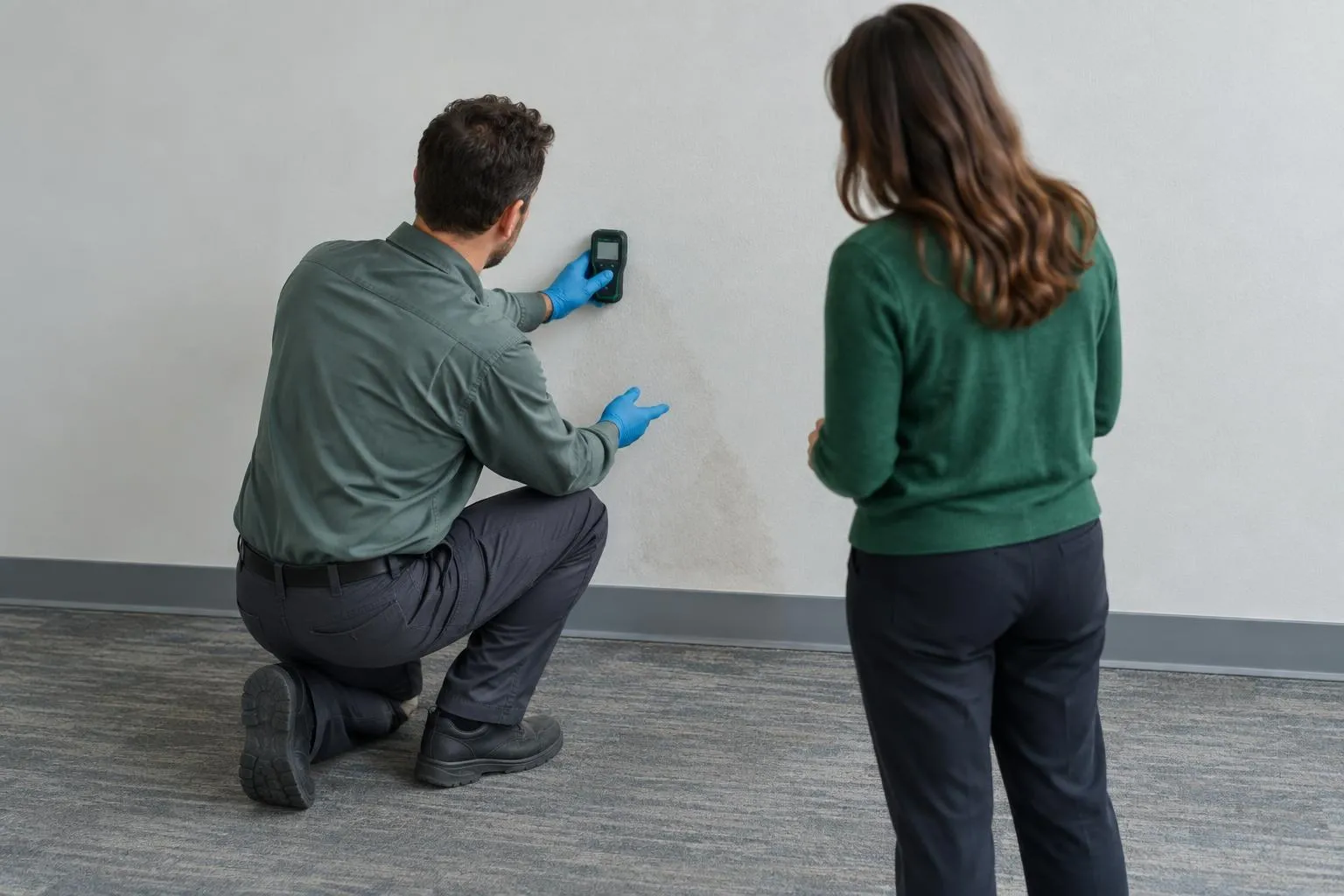
Professional-grade equipment is non-negotiable: thermal imaging cameras (infrared), non-invasive moisture meters, humidity meters, HID lighting, and mold sampling equipment. If they mention using basic flashlights and visual-only assessment, they’re operating like it’s 2005. Good answer includes specific equipment brand names and why each tool serves a purpose.
9. Is your inspection non-destructive and non-invasive?
Quality mold inspections should never require removing walls, flooring, or HVAC components. If an inspector suggests they need to cut into your building to check for mold, that’s either a red flag or a sign they’ve already found something significant and are being honest about the scope. Ask clarifying questions before they start drilling or cutting.
10. What kind of testing will you perform, and which laboratory will analyze the samples?
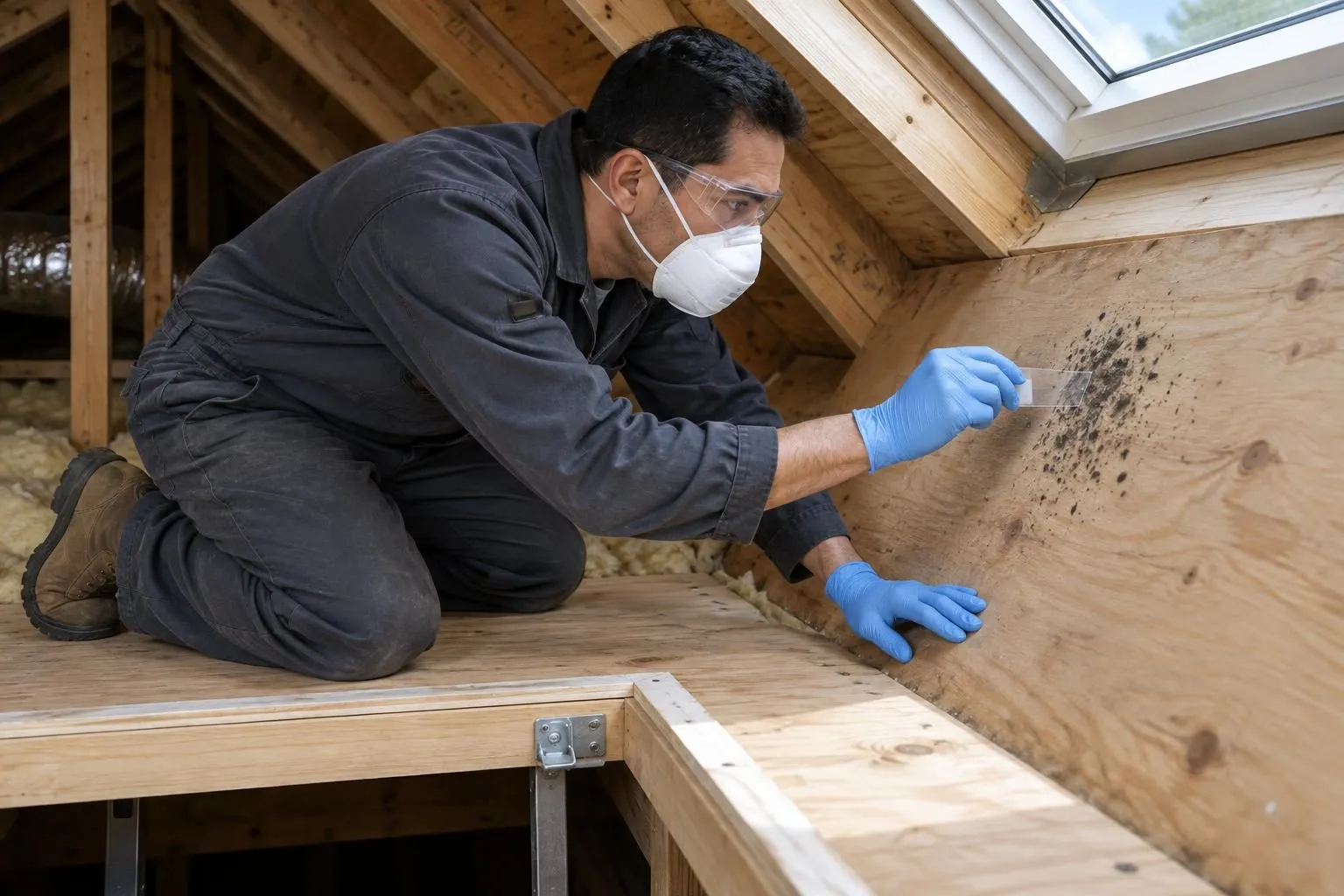
Credible inspectors use accredited third-party labs, not store-bought mold test kits from Home Depot. Testing might include air sampling (to identify spore levels), surface sampling, or bulk material analysis. The lab should be certified and independent. Bad answer: “We have an in-house lab.” Good answer: “We’ll send samples to [specific accredited lab] for species identification and spore count analysis.”
Pro Tip:Ask for the lab’s accreditation number. You can verify it. If they can’t provide one, they’re not using a real lab.
11. Can you test for mycotoxins and mold in HVAC systems?
This separates good inspectors from comprehensive ones. Not every situation requires mycotoxin testing, but the ability to test means they understand advanced scenarios. HVAC system assessment is critical because mold can colonize ductwork and spread contamination throughout a building. If they hesitate on these questions, you’re looking at basic-level service.
12. Can you identify all types of mold present and explain remediation differences?
Different mold species require different approaches. Black mold (Stachybotrys) gets media hype but isn’t always the worst offender. A professional should explain species-specific risks and remediation protocols. If they lump everything as “toxic mold,” they’re oversimplifying.
13. Will you provide a comprehensive written report with photos?
The report should include: all affected areas mapped with location details, mold species identified, visual documentation of each area, assessment of infestation extent, and notation of hidden areas checked (behind walls, under flooring, ventilation systems). Photos matter because they’re evidence. A text-only report is basically useless for contractors or insurance companies.
| Report Element | Why It Matters |
|---|---|
| Location mapping | Helps contractors identify scope without re-inspection |
| Species identification | Different molds need different remediation approaches |
| Photo documentation | Evidence for insurance claims and contractor quotes |
| Moisture source analysis | Addresses root cause, not just symptoms |
| Hidden area notes | Demonstrates thoroughness; supports insurance liability |
14. How quickly can you schedule an inspection, and will you provide a specific appointment time window?
Standard availability is 1-2 business days from initial contact. Anything slower means they’re backlogged or not serious. And make sure they give you a specific time window (e.g., “Tuesday 10 AM to 12 PM”) instead of “sometime next week.” You shouldn’t have to block an entire day waiting.
15. Can you provide references from past commercial clients?
Ask for at least three references from similar-sized facilities inspected in the past 12 months. Contact them and ask: Did the inspector show up on time? Were the findings clear and actionable? Did the report help you make decisions? Were there any surprises or missed items? References are where promises meet reality.
Reality Check:If an inspector can’t or won’t answer these questions directly, they’re either hiding something or don’t understand their own business. Either way, that’s not who you want in your building.
Practical Bottom Line
You’re about to trust someone to look for problems in your commercial property and give you data that could cost thousands to address. That’s not the time to accept vague credentials, rushed timelines, or conflicted incentives.
Next steps:
- Create a scorecard using these 15 questions. Have at least three inspectors answer them in writing before you schedule anything.
- Verify credentials independently. Don’t just take their word for it—look up IICRC, NORMI, and ACAC certifications on those organizations’ websites.
- Ask for the lab contact. Call the lab they’ll use and confirm accreditation before they start.
- Read past reports. Ask for a sample report from a similar-sized facility. Does it look thorough or generic?
For more context on what a mold inspector actually does and what to expect from the process, check out our Complete Guide to Mold Inspectors. It covers everything from inspection types to remediation standards in one place.
The money you save on hiring wrong gets spent on fixing it later. Do the vetting now.
Done reading? Get quotes from mold inspectors near you.
Takes about a minute. Free, no obligation; providers reply to you directly.
Popular cities:
Nick built this directory to help homeowners find credentialed mold inspectors without wading through contractors who mostly want to sell remediation — a conflict of interest he ran into when trying to assess his own home after a plumbing leak.