

Office location not published
Service area: “Ed Lampl Environmental Testing, Home Inspection and Mold Testing in Pittsburgh 412-222-5968”
Published service area ↗Compare curated mold inspectors, check certifications, read reviews, and request quotes — all in one place.
Map shows providers with a known office location. All providers are listed below.
No providers match this filter.
Providers with an office in the Pittsburgh area, matched by the ZIP code of their published address.
Based outside the Pittsburgh area, with Pittsburgh named in the service area on their own website.
Office location not published
Service area: “Ed Lampl Environmental Testing, Home Inspection and Mold Testing in Pittsburgh 412-222-5968”
Published service area ↗Office location not published
Service area: “First Class Home Inspections provides mold and air quality testing throughout Pittsburgh and Western PA.”
Published service area ↗Office location not published
Service area: “Mold Inspection & Testing Pittsburgh PA”
Published service area ↗Also in Pennsylvania: Lancaster area (3), Reading area (2), Lehigh Valley area (1)
Need help choosing? Get matched with top providers in seconds.
0 providers selected
Are you a mold inspector in Pittsburgh? Already listed here: Absolute Safeguard Home Inspection Services, Inc., ACM SOLUCIONES Y SERVICIOS S.A.C., Clarity Home Inspection and 5 more.
List your businessView curated providers, check certifications, and read real client reviews.
Select up to 5 providers and send your project details. Free, no obligation.
Compare quotes, check availability, and book directly with the provider.
Finding a competent mold inspector in Pittsburgh is harder than it should be. You’ll get calls back from guys with a moisture meter and a Facebook page, or inspectors who’ve never actually testified on findings and don’t know the difference between a CMI credential and a contractor’s license. This directory cuts through that — it’s a curated list of vetted professionals who actually know what they’re looking at.
Credential check first. Look for CMI (Certified Mold Inspector), ACAC CMC (Council-certified Microbial Consultant), or ACAC CMRS (Remediation Supervisor). These require real coursework and third-party lab work, not just a weekend seminar. If the inspector’s bio lists nothing but their company name and a phone number, keep scrolling.
Ask about their process — specifically. A legit inspection includes visual assessment, moisture mapping (thermal imaging or moisture meters to find hidden water), and air or surface sampling sent to an accredited third-party lab. If they’re pricing you at $200 and claiming they’ll “take samples,” they’re likely cutting corners. Real sampling work costs money because the lab work costs money.
Pennsylvania licensing nuance. Pennsylvania doesn’t license mold inspectors at the state level like it does electricians or plumbers. That’s actually why credentials matter more — CMI and ACAC certifications are your signal that someone met a professional standard. Ask if they’re bonded and insured for environmental consulting work.
Turnaround and report quality. Lab results take 5–10 business days. Any inspector promising results in 48 hours is either lying or doing something untrustworthy. When you get the report, it should name the mold species, quantify the extent, identify the likely moisture source, and recommend next steps. If it’s three paragraphs and a photo, they didn’t do the work.
Pro Tip: Get three quotes. The variation will tell you a lot. If two are $400 and one is $150, the cheap one isn’t saving you money — they’re doing a visual-only walk-through and calling it an inspection. If all three are $600+, you’re probably in a market where complexity or travel time is driving the cost up.
A standard mold inspection runs $200–$800 depending on the property size, accessibility, and whether sampling is included. A 2,000-square-foot house with obvious water intrusion (basement flooding, roof leak) usually lands in the $350–$500 range. If you need extensive moisture mapping or multiple sampling points, expect the higher end.
The process: inspector arrives, walks the house methodically (looking for staining, odor, visible growth, water marks), documents findings with photos and/or thermal imaging, takes air or surface samples if needed, and sends them to a lab. You’ll have a written report in 2–3 weeks that tells you what’s there, where it likely came from, and what remediation looks like.
Reality Check: The cheapest inspector isn’t protecting you — they’re protecting their margins. Mold reports sometimes get used in litigation or insurance claims. If your inspector cut corners on sampling or misidentified the species, you’re the one who pays for it later.
Pittsburgh’s older housing stock — Victorian era through mid-century industrial neighborhoods — means water intrusion issues are common. Basements flood during heavy rains; roofs leak in the North Shore and Lawrenceville. You’ll also see mold pop up after sudden plumbing failures or HVAC condensation problems. The inspectors in this directory know Pittsburgh’s climate patterns and building types, which matters when they’re interpreting moisture findings.
Mold Inspector services in Pittsburgh typically run $200-800 per inspection, depending on scope, complexity, and turnaround requirements. Expedited work and specialized equipment add cost.
Look for CMI — it's the credential that separates qualified mold inspectors from the rest. Also verify insurance, check reviews, and confirm they can handle your project's specific requirements.
There are currently 8 mold inspectors listed in Pittsburgh, PA on MoldRegistry.
Sponsored providers pay for more prominent placement on pages where they already qualify to appear. Payment does not change a provider's location, credentials or reviews, and it is not an endorsement. All providers on MoldRegistry — sponsored or not — are real businesses.
Find certified, independent mold inspectors: what to expect, how much to pay ($300–$700), and red flags to avoid before hiring.
mold inspector costs $300–$700 on average. See exactly what affects pricing, why quotes vary wildly, and how to avoid overpaying.
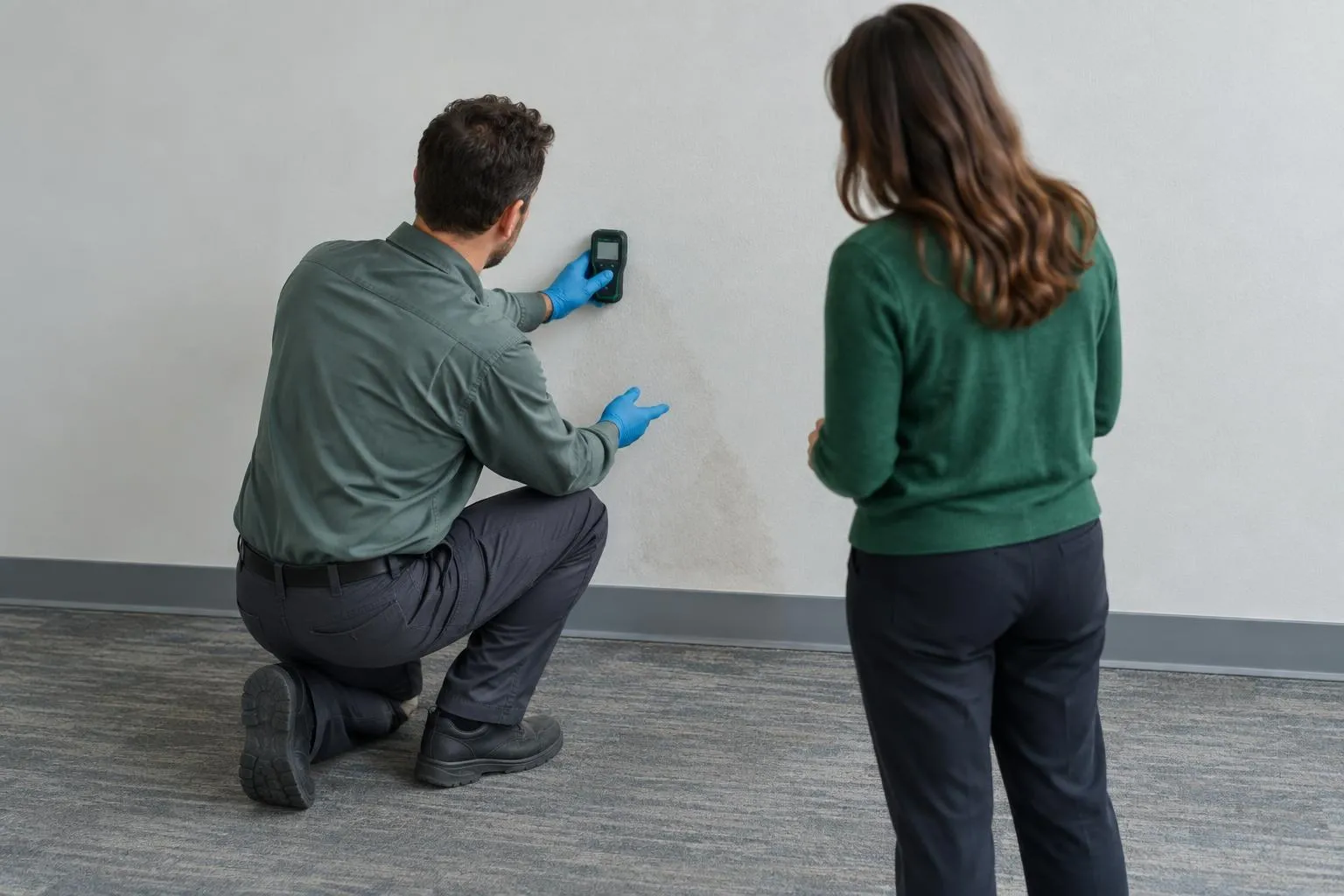
Most states don't license mold inspectors. Learn what separates qualified experts from weekend-certified amateurs before hiring.
Looking for more? Browse our full resource library or find mold inspectors in other cities.