Get free quotes from mold inspection near you
Takes about a minute. Free, no obligation; providers reply to you directly.
I showed up to a water damage restoration job last spring thinking a mold inspector was basically a fancy term for someone with a flashlight and an allergy mask. Three weeks and $8,000 in unnecessary remediation later, I realized I’d paid for testing on mold that wasn’t actually there—because I never got the inspection first. Nobody told me these were two completely different services solving two completely different problems.
If you’re staring at a suspicious stain on your basement wall (or worse, a flooded basement), you’re probably wondering the same thing I was: do I need a mold inspector, mold testing, or both? Let me save you the tuition I paid in mistakes.
The Short Version:Start with a mold inspection to find the problem and its moisture source. Order testing only if the inspector finds visible growth or high moisture levels that need species identification. Don’t waste money testing for mold that inspection would’ve found anyway.
Key Takeaways
- Mold inspection identifies WHERE mold is and WHY it’s growing; testing identifies WHAT species and HOW MUCH
- Most mold problems are solved through inspection alone—testing is the follow-up confirmation, not the starting point
- Inspections give you answers today; testing takes days or weeks, which matters when moisture is actively spreading
- Typical workflow: inspect first, test only if the inspection reveals concerning conditions
The Confusion Nobody Clears Up
Here’s what the industry won’t tell you plainly: a mold inspection and mold testing are not the same thing, and you don’t automatically need both.
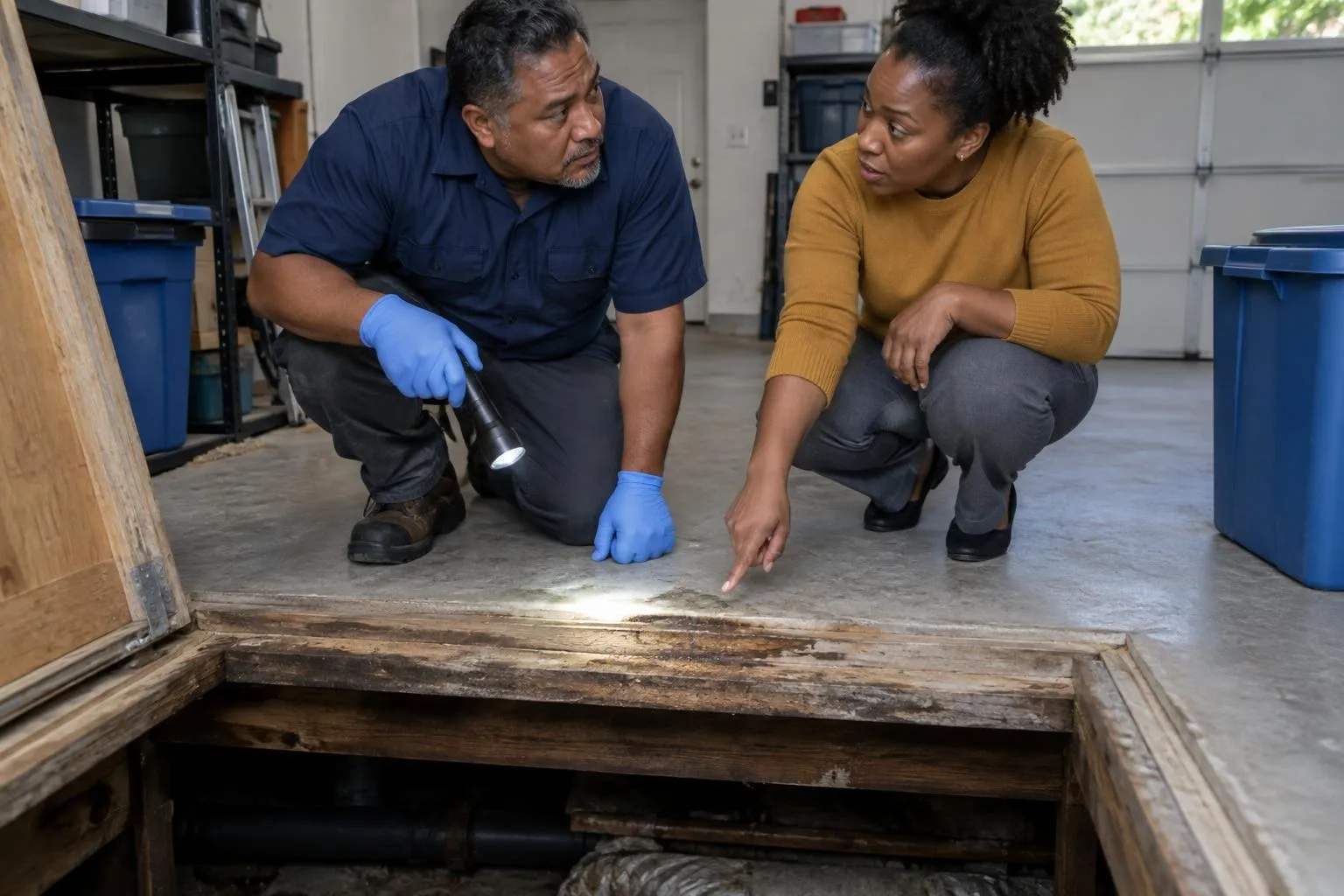
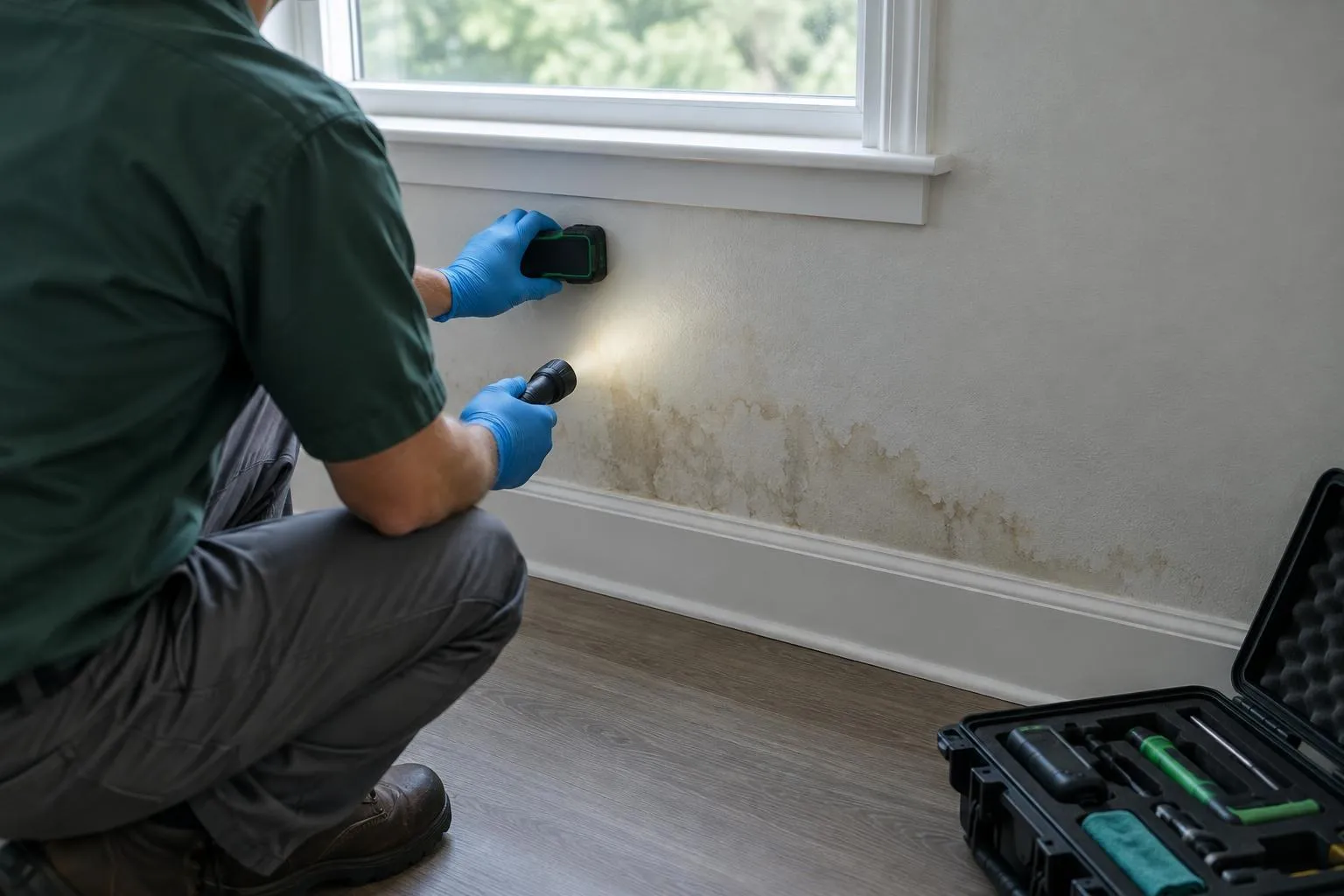
Mold inspection is detective work—someone walks your property looking for visible mold, water stains, condensation, and the moisture sources feeding the problem. They use infrared cameras and moisture meters to find hidden dampness in walls and ceilings. You get answers on the same day.
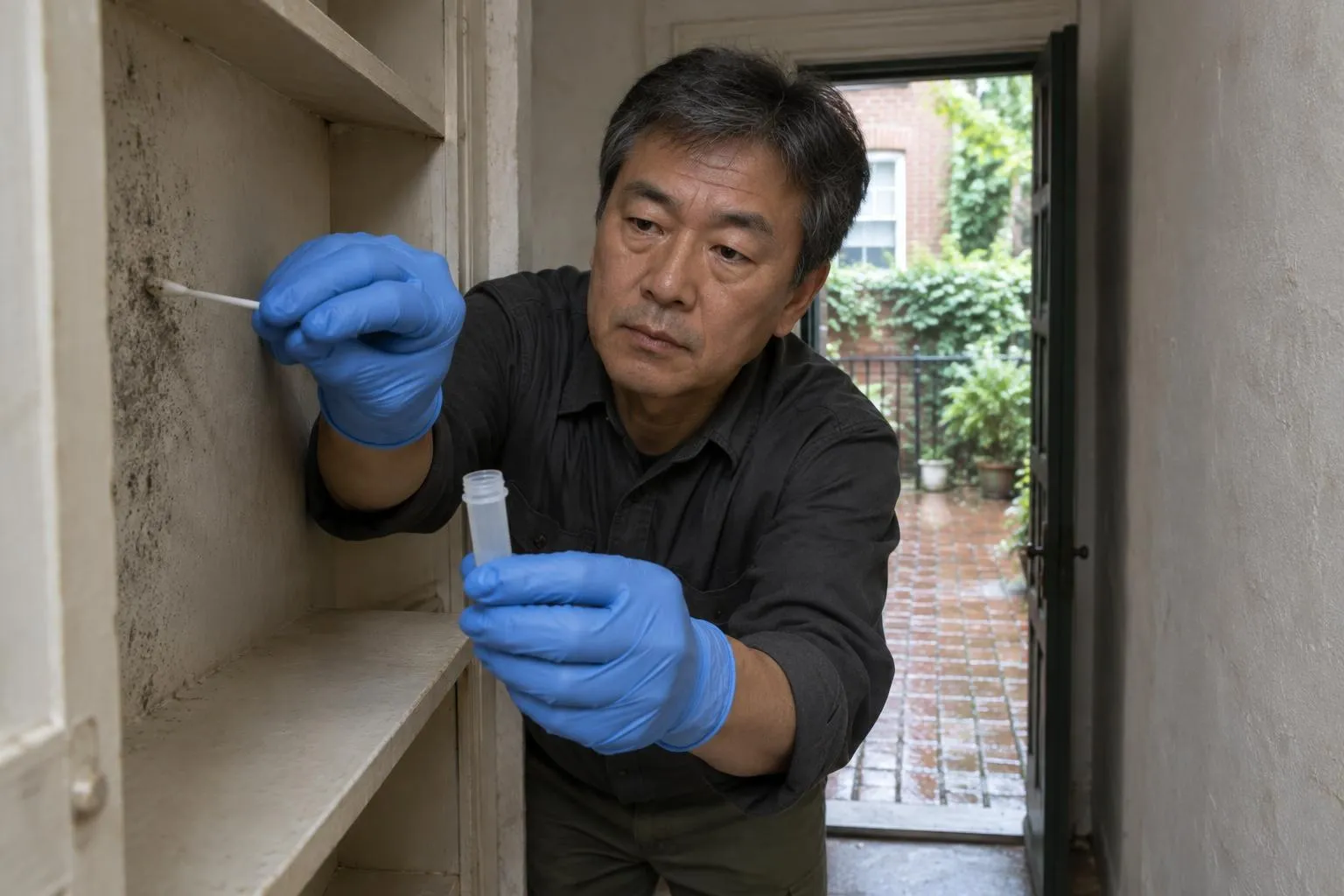
Mold testing is lab work—someone collects air, surface, or material samples and sends them to a laboratory. You get back a report weeks later telling you what species of mold was present and how many spores are in the air.
The EPA is clear on this: most mold problems can be identified through visual inspection alone. Testing is the confirmation tool, not the diagnostic tool.
But here’s where it gets stupid: many testing companies market themselves as “mold inspectors” when they’re really just sample collectors. And many homeowners get talked into testing before anyone even looked at the problem. That’s how you end up paying $500-$800 for lab results on mold that doesn’t exist, or worse—spending thousands remediating a problem you could’ve solved by fixing a leaky gutter.
What Each Service Actually Does
| Aspect | Mold Inspection | Mold Testing |
|---|---|---|
| What it answers | Where is the mold? Why is it growing? What’s causing the moisture? | What species is it? How many spores? |
| How it works | Visual assessment + moisture mapping with infrared cameras and meters | Air, surface, or bulk samples sent to laboratory for analysis |
| Timeline | Same day—you leave with findings and recommendations | 3-14 days for lab analysis and report |
| Cost | $300-$700 depending on property size | $400-$900 per sample (often $800-$1,500+ for comprehensive testing) |
| Outcome | Report identifying problem areas, moisture sources, and remediation steps | Lab report showing mold species and spore concentrations |
| When to use | Before major renovations, after water damage, preventive maintenance, when you see suspicious stains | After inspection reveals concerning conditions, for health risk assessment, legal/insurance documentation |
How a Real Mold Inspection Works
A certified mold inspector (look for credentials like CMI or ACAC CMC/CMRS) follows a structured process:
Pre-inspection: They ask about your history. Roof leaks? Burst pipes? Flooding? Persistent moisture smell? This context shapes where they look hardest.
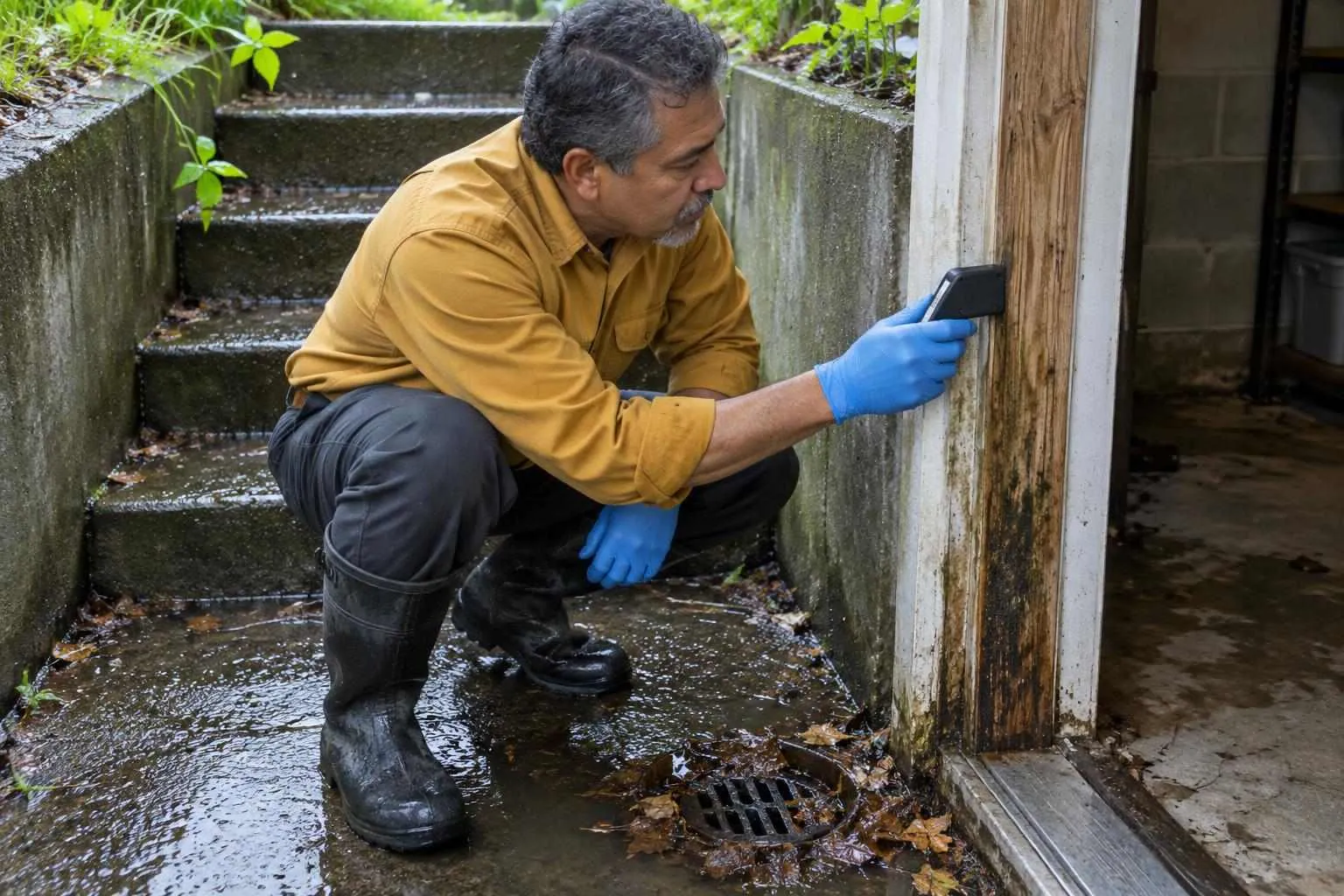
The visual walkthrough: They examine basements, bathrooms, attics, crawl spaces, under sinks, around HVAC units—anywhere moisture collects. They’re looking for visible mold, water stains, discoloration, and soft drywall or wood.
Moisture mapping: This is where the inspection separates from a DIY walk-through. They use infrared thermal imaging cameras to see temperature differences that reveal hidden moisture behind walls. They use calibrated moisture meters to measure dampness in drywall, insulation, and framing. These tools find problems you can’t see.
Airflow evaluation: They check how air moves through your space, because stagnant air + humidity = mold breeding ground.
The report: You get documentation of what they found, where moisture is coming from (that’s the critical part—it’s not just about the mold, it’s about why it’s there), and what needs fixing.
Reality Check:If an inspector walks your house and says “we found mold, now you need a $1,200 testing package,” ask why. If the mold is visible and the moisture source is identified, testing doesn’t change the remediation plan.
When Testing Actually Makes Sense
Testing isn’t worthless—it’s just not where you start.
Order testing if:
- The inspection found visible growth or high moisture but you need species identification for health risk assessment (some molds are nastier than others, and if you have respiratory issues, that matters)
- You need legal or insurance documentation of what’s in your air or on your walls
- The inspector is uncertain about the extent of hidden contamination in walls or HVAC systems
- You’re buying a house and the inspection flagged concerning moisture—testing confirms severity before you negotiate repairs
Pro Tip:If the inspector says “this looks like Stachybotrys (the notorious black mold),” that’s a visual opinion. Testing confirms it. But here’s the thing—remediation for all mold types is the same: find the moisture source, fix it, clean the affected area. Species ID rarely changes what you actually do.
The Timing Problem Nobody Mentions
This matters more than you think: inspections finish in a few hours; testing takes weeks.
If you have active water intrusion—a leaking roof, a burst pipe, high humidity—mold spreads while you’re waiting for lab results. The inspection identifies the problem today so you can stop the bleeding today. Testing tells you what was there two weeks ago.
In one case I tracked, a homeowner delayed remediation by three weeks waiting for testing results. The inspector had already identified the moisture source (a failed bathroom exhaust vent). The testing results came back confirming mold. By then, the damage had roughly doubled.
Don’t be that person.
The Practical Workflow (What Actually Works)
Step 1: Get a mold inspection. Cost: $300-$700. Timeline: 1 day. This is your baseline. You find out where the problem is and why.
Step 2: Decide if you need testing. If the inspection found visible mold or high moisture levels and you need species ID or severity data, order testing. If the inspection found the problem and the moisture source is clear, skip it and move to remediation.
Step 3: Fix the moisture source. This is non-negotiable. You can clean mold off a wall 100 times; if the moisture is still there, it comes back. The inspection tells you what to fix. Do that.
Step 4: Remediate based on findings. The inspection report should include remediation recommendations. Follow them.
Key Takeaways (Real Talk)
- Inspection finds the problem; testing confirms species and severity if you need that detail
- Most homeowners need inspection + remediation, not inspection + testing + remediation
- Testing delays decision-making on active moisture problems—use inspection for speed, testing for confirmation
- Cost-effective approach: $400-700 inspection first, testing ($800-1500+) only if inspection warrants it
Practical Bottom Line
You need a mold inspection. You probably don’t need testing unless the inspection reveals something that requires species identification or legal documentation.
Here’s what to do:
- Call a certified mold inspector (CMI, ACAC CMC/CMRS credentials matter)
- Get the inspection report with findings, moisture sources, and remediation steps
- Ask directly: “Do I need testing?” A good inspector will be honest—most won’t recommend it unless there’s a reason
- Fix the moisture source (that’s the real fix; the mold cleanup is secondary)
- Only order testing if the inspector identifies concerning conditions and you need confirmation for health, legal, or insurance reasons
If you’re dealing with this after water damage or in a specific city, check out our city-specific mold resources and the complete guide to mold inspectors for next steps.
The money you save by skipping unnecessary testing can go toward actually fixing the moisture problem—which is the only thing that stops mold from coming back.
Done reading? Get quotes from mold inspectors near you.
Takes about a minute. Free, no obligation; providers reply to you directly.
Popular cities:
Nick built this directory to help homeowners find credentialed mold inspectors without wading through contractors who mostly want to sell remediation — a conflict of interest he ran into when trying to assess his own home after a plumbing leak.